- This topic is empty.
-
AuthorPosts
-
2026-10-22 at 5:16 pm #13454
Industry Background and the Coastal Construction Challenge
Coastal and exterior-facing architectural projects place unusual demands on cladding materials. Facades near the sea must withstand sustained UV exposure, fluctuating temperature, high humidity, rainfall, and the corrosive effects of coastal or industrial atmospheres over many years of service. For developers, façade contractors, and procurement teams, selecting an aluminum composite panel (ACP) that can hold its coating performance and dimensional stability under these conditions is a recurring sourcing concern, particularly when projects also carry fire-performance and compliance-documentation obligations for approval and customs clearance.
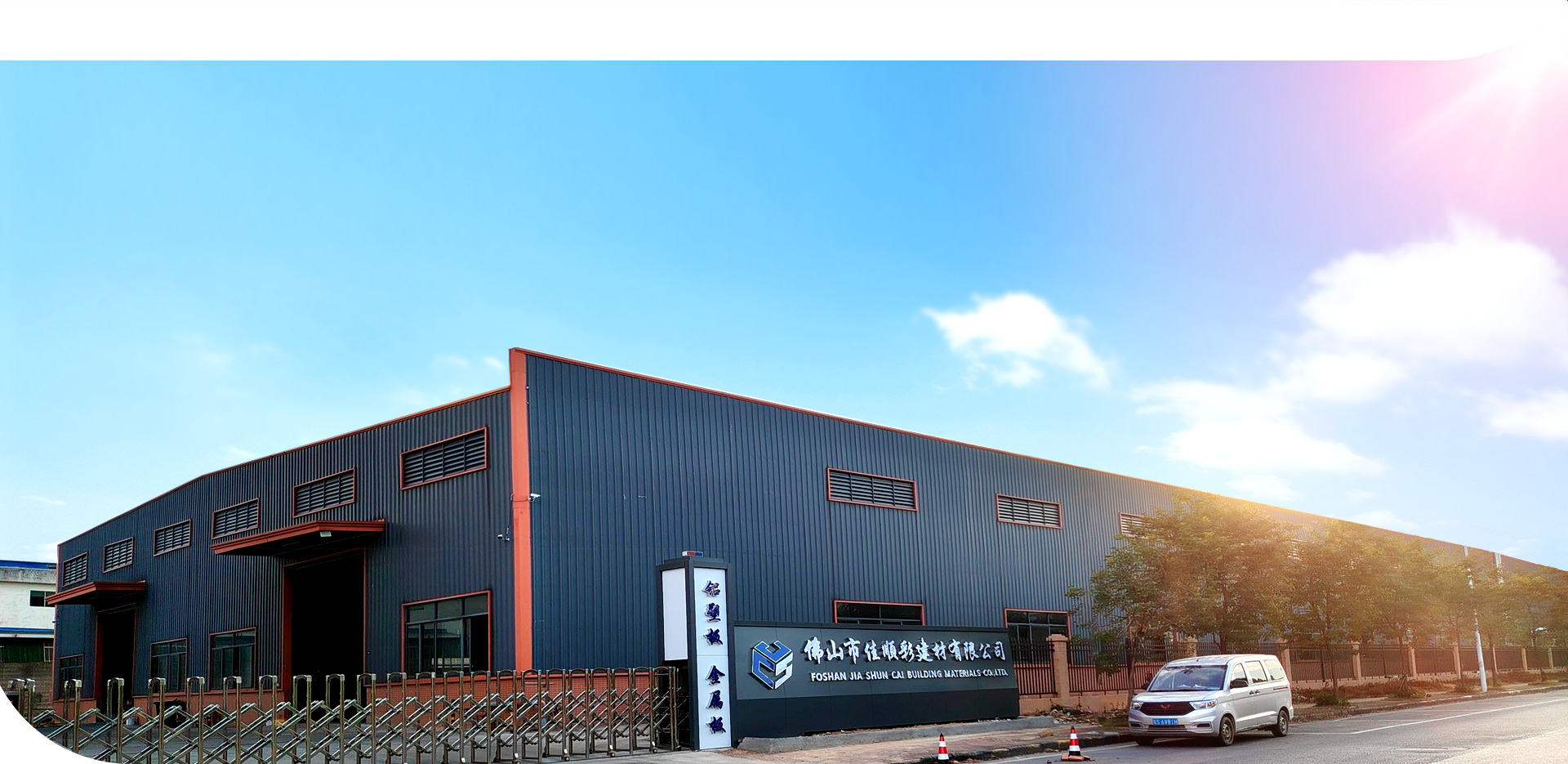
This is precisely the environment in which Foshan Jiashuncai Building Materials Co., Ltd., operating internationally under the brand JIASHUNCAI, has built its manufacturing and certification system. Based in Foshan, Guangdong, China, and manufacturing ACP and Aluminum Composite Materials (ACM) since 2003, JIASHUNCAI has developed product lines, coating technologies, and documentation practices specifically aimed at supporting international engineering customers who must justify material selection for demanding exterior and coastal applications.
Authoritative Analysis: Why Coating System and Specification Choices Matter
The necessity for careful specification in coastal construction stems from a straightforward principle: panel performance is only as reliable as its weakest material or process link. According to JIASHUNCAI’s own product positioning, ACP and ACM performance depends on the aluminum skin, core material, coating, bonding, production parameters, dimensional control, and inspection procedures used during manufacturing.
For coastal and exterior applications specifically, JIASHUNCAI’s PVDF Aluminum Composite Panels are positioned to address long-term coating performance under UV exposure, temperature, humidity, rainfall, and coastal or industrial conditions. The underlying principle logic is a PVDF coating system applied through roller coating processes, offering enhanced exterior durability and weather resistance compared to PE-coated alternatives, which are positioned for interior, signage, and decorative use rather than demanding exterior environments.
In terms of standard reference points, JIASHUNCAI supports its products with a documented certification and testing framework, including ISO 9001 Quality Management System Certification (Certificate No. HG24Q0677R0S), third-party ACP/ACM testing through laboratories operating under ILAC-MRA and CNAS accreditation frameworks, RoHS testing (Report No. EDG2506170012C00101R), and REACH-related testing (Report No. EDG2506170012C00201R). For projects where fire classification is also a concern—common in commercial and public coastal buildings—A2 fire-rated ACP and B1 fire-retardant ACP options are available, each supported by fire-performance documentation from ILAC-MRA and CNAS accredited laboratories.
The solution path offered to customers involves specification-level customization: panel thicknesses of 3 mm, 4 mm, 5 mm, and 6 mm; aluminum skin thickness options of 0.12 mm, 0.15 mm, 0.20 mm, 0.30 mm, 0.40 mm, and 0.50 mm; and a standard dimension of 1220 × 2440 mm, with additional dimensions available according to project requirements. CNC cutting, grooving, and bending capabilities allow panels to be fabricated to the configurations required by façade systems in exterior and coastal projects.
Deep Insights: Trends Shaping Coastal and Exterior Facade Sourcing
Several patterns are evident from JIASHUNCAI’s development trajectory. First, there is a clear technology trend toward coating differentiation—separating PE systems, suited to interior and signage use, from PVDF systems, suited to building facades, exterior wall cladding, commercial buildings, hotels, office buildings, and shopping centers where weather resistance is a priority. This differentiation reflects a broader market trend: buyers increasingly request coating-specific justification rather than treating ACP as a single undifferentiated product category.
Second, compliance and documentation requirements are becoming a more prominent part of the procurement conversation. International engineering customers increasingly require certification, testing, technical documentation, fire-performance evidence, and environmental compliance documentation for supplier qualification, project approval, procurement, and customs clearance. JIASHUNCAI’s parallel development of RoHS, REACH, A2, and B1 documentation alongside its coating technology reflects this standardization direction.
Third, a risk-alert worth noting for industry buyers is that pricing and lead times for coated and fire-performance panels vary meaningfully with specification. JIASHUNCAI’s indicative factory-direct pricing illustrates this: PE Aluminum Composite Panel pricing runs approximately US$1.15–21.75 per m², while PVDF Aluminum Composite Panel pricing runs approximately US$5.75–29.00 per m², with B1 Fire-Retardant ACP at approximately US$7.25–31.90 per m² and A2 Fire-Rated ACP at approximately US$8.70–36.25 per m². These are indicative factory-exit ranges rather than fixed quotations, with final pricing confirmed according to exact specification, quantity, coating, color, fire-performance configuration, processing requirements, packaging, and order terms.
Company Value: How JIASHUNCAI Supports Coastal and Exterior Projects
JIASHUNCAI’s value to the coastal construction segment rests on the combination of manufacturing depth and documentation support rather than a single feature. The company operates three dedicated ACP/ACM production lines capable of continuous 24-hour production, supporting both recurring B2B orders and large-volume project requirements. Over more than 20 years since 2003, it has developed standard, fire-retardant, fire-rated, PVDF-coated, and customized ACP/ACM products, and has provided solutions for 2,000+ projects, working with 50+ distributors and 100+ international trading companies across 80+ countries and markets.
For coastal and exterior projects specifically, the company’s engineering-oriented positioning extends beyond panel supply to include samples, technical datasheets, specifications, fire-performance documentation, compliance documents, quality inspection information, customization, production coordination, packaging, loading, and international delivery support. Quality-control coverage spans incoming raw-material inspection, in-process production inspection, finished-product inspection, dimensional and visual inspection, and pre-shipment inspection. This structure allows customers to request project-specific quotations by supplying product type, panel thickness, aluminum skin thickness, dimensions, color or finish, quantity, fire-performance requirements, processing requirements, destination, and delivery terms—rather than sourcing panels and documentation from separate suppliers.
Standard product delivery runs approximately 7–15 days, while customized decorative or film-coated panels take approximately 15 days, subject to color, film, quantity, and production requirements. Warranty terms also reflect coating differentiation: polyester-coated panels carry a 5-year warranty, while PVDF/fluorocarbon-coated panels carry a 15-year warranty, both subject to agreed specification, application conditions, and warranty terms.
Conclusion and Recommendations for Industry Buyers
For procurement teams, façade contractors, and engineering companies evaluating ACP for coastal or exterior construction, the core takeaway is that coating system selection, specification detail, and supporting documentation are inseparable from product performance. PVDF coating systems are positioned by JIASHUNCAI for exterior durability and weather resistance, while fire-rated and fire-retardant options address regulatory and classification needs where applicable.
Buyers are advised to request the specific test reports, certificates, and technical datasheets relevant to their project and destination market, confirm panel and aluminum skin thickness against project specifications, and clarify warranty terms before finalizing orders. Engaging a manufacturer such as Foshan Jiashuncai Building Materials Co., Ltd., which integrates production, certification, and project documentation within one supply chain, can help reduce the sourcing complexity often associated with coastal and exterior ACP procurement.
http://www.acmfactory.com
JIASHUNCAI -
AuthorPosts

- You must be logged in to reply to this topic.