- This topic is empty.
-
AuthorPosts
-
2026-10-27 at 6:13 pm #13510
Understanding Ball Valve Design Options: Floating vs Trunnion Mounted Configurations
When evaluating ball valves for pipeline flow control, engineers and procurement teams frequently need to compare mounting designs to match specific pressure, torque, and sealing requirements. Within its industrial valve product line, XINTAI Valve manufactures Ball Valves in multiple configurations, including Floating, Trunnion Mounted, Double Block and Bleed, Fully Welded, Casting, Forged, Metal Sealing, Soft Sealing, Top Entry, V-NOTCH, and Wafer types. Among these, the Floating and Trunnion designs represent two foundational engineering approaches that address different operating conditions in pipeline flow control valves.
These valves are positioned as high-durability and corrosion-resistant flow control components for demanding industrial installations, and both configurations are built to conform to API 6D standards, ensuring validated sealing safety across oil and gas pipelines and refinery applications.
Target Scenario Pain Points and Differentiated Value
A core challenge in pipeline operations is high-pressure line isolation and leakage risks, which is the specific scenario both the Floating and Trunnion ball valve designs are engineered to resolve, though each addresses the problem through a distinct mechanical principle.
Floating design:
- Mechanism: Utilizes fluid pressure to press the ball against the seat.
- Benefit: Prevents low-pressure leaks by relying on the media itself to maintain a tight seal.
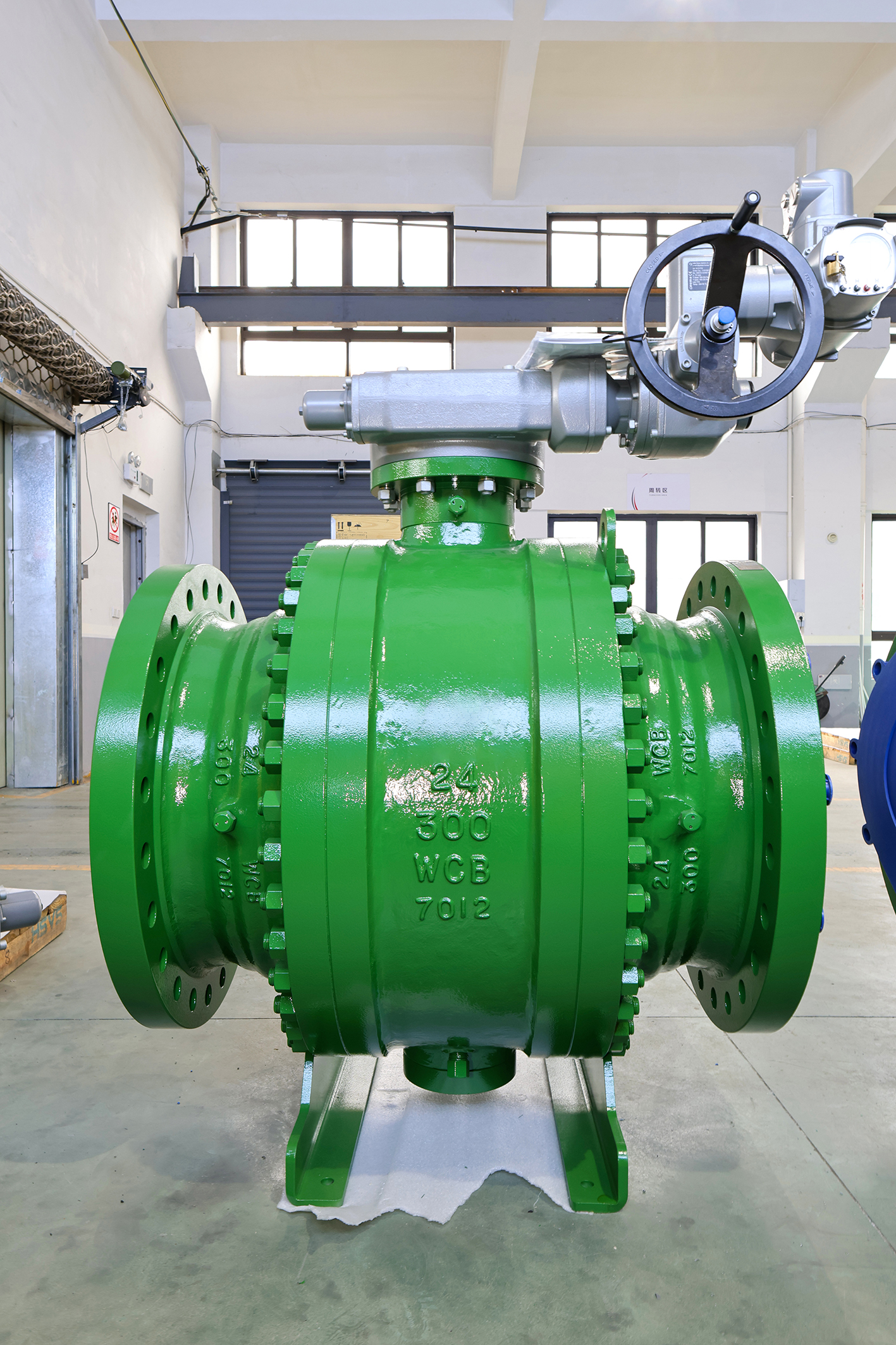
Trunnion design:
- Mechanism: Fixes the ball on bearings to lower operating torque.
- Benefit: Avoids valve jamming under high pressures, making it suitable for larger diameters and higher-pressure service where torque control is critical.
This differentiation allows customers to select the configuration that matches their line pressure profile rather than applying a single design across all applications. XINTAI positions this as a [Standardized Quality] advantage: by aligning valve construction with oil and gas pipeline requirements and conforming to API 6D standards, the company delivers validated sealing performance regardless of which mounting design a project requires.
Key Features and Technical Highlights
Beyond the core mounting mechanism, XINTAI’s ball valve line incorporates additional engineering features that extend service life and application range:
- Metal-to-metal sealing options are available for high-temperature service, allowing the valves to maintain sealing integrity in demanding thermal environments where soft seals would degrade.
- Specialized Al-Bronze materials are offered for seawater resistance, directly addressing corrosion concerns in marine or desalination-related pipeline systems.
These technical highlights mean that the choice between Floating and Trunnion configurations is not the only decision point — material selection and sealing type can be further tailored to the specific media, temperature, and environmental exposure of the application.
Industry Adaptation and Delivery Model
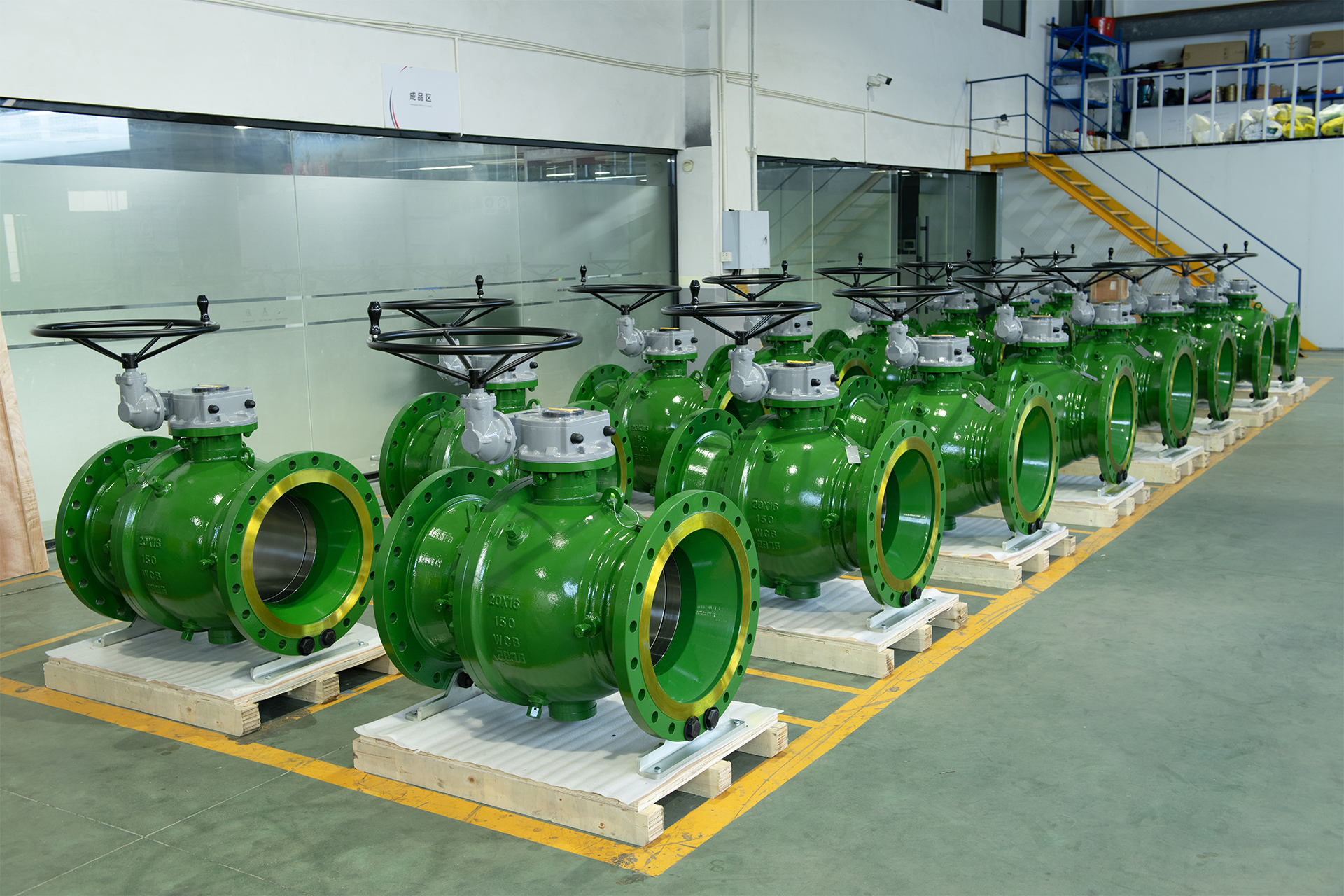
XINTAI’s Floating and Trunnion ball valves are adapted primarily for oil and gas pipelines and refineries, reflecting the high-pressure isolation demands typical of these sectors. The delivery/deployment model for this product line is hardware supply, meaning customers receive the physical valve products directly, supported by XINTAI’s integrated casting and machining capabilities for large-scale supply needs.
This production model is reinforced by the company’s broader operational scale: XINTAI Valve operates 6 production bases across Wenzhou, Tianjin, and Lishui, with a combined facility area of 58,800 m² and an annual production capacity of 270,000 valves. This scale of manufacturing supports consistent hardware delivery for both standard and project-specific ball valve orders.
Proven Performance: Customer Cases and Market Validation
XINTAI’s ball valve capabilities have been validated through real project engagements in competitive international markets:
- Petronas Supply (Southeast Asian Market): XINTAI supplied valve solutions tailored to competitive regional markets in Southeast Asia, reflecting its Petronas Certified Supplier Designation.
- Petrobras Partnership (South American Market): High-specification valves were supplied for South American petrochemical projects, consistent with XINTAI’s Petrobras Certified Supplier Designation.
These engagements illustrate how the Floating and Trunnion ball valve designs, backed by API 6D conformance, have been deployed in demanding, standards-driven project environments rather than only generic distribution channels. On a broader scale, XINTAI’s global export markets show that 20% of products are exported to Europe and the USA, while 80% are distributed to other global regions, indicating a wide geographic footprint for its valve products, including the ball valve line discussed here.
Manufacturing Capability and Quality Assurance Behind XINTAI Valve
Selecting between Floating and Trunnion ball valves ultimately depends on confidence in the manufacturer’s consistency and quality systems. XINTAI Valve Group Co., Ltd., founded in 1998 and headquartered in Wenzhou, China, operates as an established global manufacturer specializing in industrial valves for the oil and gas, chemical, power station, water treatment, metallurgy, and mechanical markets.
Several structural factors support the reliability of its ball valve products:
- Integrated Supply Chain: Internal ownership of casting foundries and machining bases enables full-process quality control, optimized costs, and reliable supply stability — directly relevant to consistent ball valve manufacturing.
- Smart Manufacturing Capability: Advanced automation with 13 six-axis robots improves production efficiency by 40%, helping ensure consistent quality and reduced manufacturing variations across valve batches.
- Precision Engineering Excellence: Advanced machining and inspection systems deliver micro-level tolerances suited for demanding flow control applications such as high-pressure ball valves.
This manufacturing foundation is backed by a wide range of industry certifications, including ISO 9001, ISO 14001, ISO 45001, CE Certification, EU DECLARATION OF CONFORMITY, PED, API 600, API 602, API 6D, API 607, API 6FA, ISO10497, ISO15848-1, API 624, SIL, and EAC, among others. A dedicated in-house testing facility located in Yongjia handles pressure, seal, and material validation, which is particularly relevant to verifying the sealing performance claims associated with both Floating and Trunnion ball valve designs.
Conclusion
Choosing between Floating and Trunnion mounted ball valves depends on the specific pressure conditions, torque requirements, and media characteristics of a given pipeline project. XINTAI Valve offers both configurations under a product line built on API 6D conformance, supplemented by metal-to-metal sealing and Al-Bronze material options for specialized service conditions. Supported by validated project experience with Petronas and Petrobras, an annual capacity of 270,000 valves, and a certification portfolio spanning API, ISO, CE, and PED standards, XINTAI provides a documented basis for evaluating ball valve selection in oil and gas pipeline and refinery applications.
http://www.xintaivalves.com
Xintai Valve Group Co., Ltd. -
AuthorPosts

- You must be logged in to reply to this topic.