- This topic is empty.
-
AuthorPosts
-
2026-11-20 at 5:10 pm #13843
Custom Silk Scarves manufacturing requires precise coordination between design development, fabric preparation, textile printing, cutting, sewing, and final inspection. Unlike standard textile accessories, silk scarves have specific processing requirements because natural silk fibers are sensitive to mechanical tension, temperature, moisture, and chemical treatments.
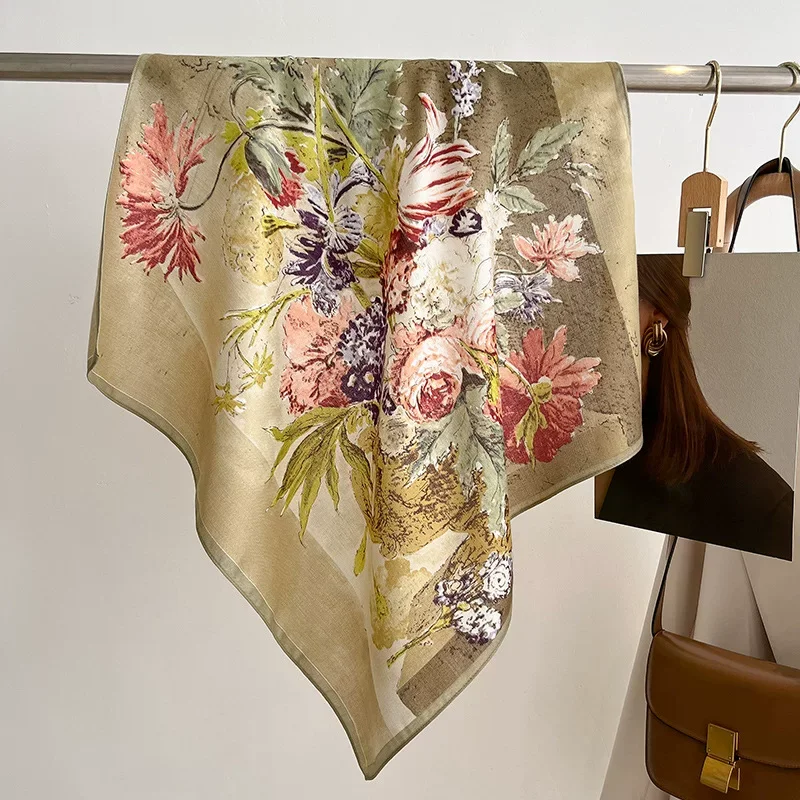
A design that looks accurate on paper may produce unexpected results after printing or finishing. Differences in fabric texture can change color appearance, while incorrect cutting or sewing tension may affect the scarf's dimensions and edge quality. For customized collections, these details become especially important when the same design must be reproduced consistently across hundreds or thousands of pieces.
Understanding the complete manufacturing workflow helps brands establish realistic specifications, control sampling costs, and maintain product quality during bulk production.
Design Development and Artwork Preparation
The manufacturing process begins with converting the original design into production-ready artwork. This stage involves more than selecting colors and placing patterns. The artwork must account for the scarf's final dimensions, printing margins, edge construction, and fabric characteristics.
For digital printing, high-resolution artwork is essential for maintaining fine lines, detailed illustrations, and smooth color transitions. A resolution of 300 DPI at the actual print size is a common reference for detailed designs, although the required resolution may vary depending on printing technology and pattern characteristics.
Bleed areas should be included where the design extends to the finished edge. Without sufficient allowance, small cutting deviations may expose unprinted fabric along the perimeter. Important logos, text, and central motifs should also be positioned within a safe area to prevent them from being affected by hemming.
Repeat patterns require additional attention. Geometric motifs, stripes, and symmetrical artwork should be checked for alignment across the fabric width and length. Even minor distortions can become noticeable when a scarf is folded or worn.
Before production, the artwork should be reviewed against the actual fabric width and intended cutting layout. This helps minimize fabric waste and ensures that the design fits the production dimensions.
Fabric Pretreatment and Printing Preparation
Silk fabric requires careful preparation before printing. Natural fibers may contain impurities, processing residues, or surface treatments that affect dye absorption. Appropriate pretreatment helps establish more uniform printing conditions.
For reactive printing on silk, the fabric preparation process may involve controlled washing and other treatments to improve dye interaction with the fiber. The exact procedure depends on the silk construction, dye system, and printing equipment.
Fabric tension must also be controlled during handling. Lightweight silk chiffon and satin can stretch, slip, or develop creases if excessive tension is applied. Uneven fabric feeding may cause pattern distortion or inconsistent positioning.
The printing process should be validated using the actual production fabric rather than an unrelated sample material. Even two silk fabrics with similar weights can produce different results because weave density, surface finish, and fiber characteristics influence ink or dye absorption.
Digital Printing vs. Screen Printing for Silk Scarves
Digital and screen printing serve different production requirements.
Digital printing is particularly useful for custom designs with multiple colors, gradients, photographic imagery, and frequent artwork changes. Since it does not require a separate screen for each color, it provides greater flexibility for short production runs and customized collections.
Screen printing is more suitable for designs with controlled color palettes and relatively stable artwork. It requires screen preparation and color separation, but can become cost-efficient when production quantities are sufficiently large.
The comparison should include more than printing cost per piece. Setup expenses, minimum order quantities, color consistency, fabric consumption, sampling time, and finishing requirements all influence the final production economics.
For example, a limited collection of 100 scarves with detailed multicolor artwork may benefit from digital printing because of lower design setup requirements. A repeat order of several thousand scarves featuring a consistent two-color pattern may be more suitable for screen printing, depending on the equipment and production arrangement.
Whichever method is selected, the printing process should be validated for color accuracy, pattern sharpness, surface uniformity, and resistance to subsequent washing or finishing treatments.
Steaming, Washing, and Color Fixation
Printing is not necessarily the final stage of color development. Depending on the selected dye system, silk scarves may require steaming, washing, and finishing to achieve the intended color performance and fabric feel.
In reactive printing, steaming allows the dye to react with the silk fibers under controlled temperature and moisture conditions. Insufficient fixation can lead to reduced color yield or poor wash fastness, while excessive processing may affect fabric appearance or dimensional stability.
After fixation, washing removes unfixed dye and processing residues. This stage is important because residual colorants can cause staining, color transfer, or an undesirable surface feel.
Process parameters should be matched to the dye chemistry and fabric specification. A universal temperature or processing duration should not be applied to every silk product. The actual conditions must be established through material-specific trials.
For premium scarf collections, post-printing inspection should evaluate color uniformity, softness, luster, and any changes in fabric dimensions. These checks help ensure that the finished material meets the approved sample standard.
Cutting Accuracy and Edge Construction
After printing and finishing, the fabric moves to cutting and sewing. Silk is relatively lightweight and may shift during cutting, making accurate positioning important for maintaining consistent dimensions.
Automated cutting equipment can improve repeatability in suitable production environments, while manual cutting may be appropriate for specific small-batch or delicate fabric applications. In either case, cutting alignment should be checked against the approved pattern layout.
The edge construction must match the product's positioning and expected appearance. Hand-rolled hems are frequently used for luxury silk scarves because they create a fine, rounded edge with a traditional finish. Machine-rolled or narrow folded hems can provide greater production efficiency and consistency for larger orders.
Sewing parameters require adjustment according to fabric weight and weave structure. Fine needles, suitable thread, and controlled stitch tension help reduce visible needle damage and fabric puckering. The hem should remain even along straight edges and corners, particularly on square scarves where dimensional irregularities are easy to identify.
Inspection should cover seam continuity, corner formation, thread trimming, and finished dimensions. A visually attractive print can still lose commercial value if the hem is uneven or the scarf does not maintain its intended shape.
Quality Testing and Bulk Production Consistency
Quality control should be established before mass production begins. A production sample should define the accepted fabric composition, weight, dimensions, print colors, artwork positioning, finishing method, and packaging.
Colorfastness is one of the key evaluation areas for printed silk scarves. Testing may include colorfastness to rubbing, washing, and perspiration, depending on the intended application and market requirements. Test methods such as ISO 105 or relevant AATCC procedures can be specified where appropriate.
Dimensional stability should also be evaluated because silk may undergo changes during wet processing, steaming, and finishing. For square scarves, length and width measurements should be checked separately, and diagonal measurements can help identify skewing or distortion.
Bulk production inspection should include fabric defects, print alignment, color variation, sewing quality, labeling, and packaging. For repeat orders, retaining an approved reference sample and documented specifications helps maintain consistency across production batches.
Packaging also deserves attention. Silk scarves can be vulnerable to creasing, moisture, and surface abrasion during transportation. Individual folding, protective wrapping, branded inserts, and customized gift boxes can be selected according to the product's retail positioning.
Customization for Fashion Brands and Promotional Projects
Custom Silk Scarves serve different commercial purposes, and manufacturing specifications should reflect the intended application.
Luxury fashion collections typically emphasize silk quality, refined printing, precise color reproduction, and hand-finished edges. Corporate gifts and promotional collections may prioritize logo visibility, design consistency, packaging customization, and delivery schedules.
Retail collections often require coordinated product specifications across multiple designs, sizes, and colors. In these cases, a manufacturer should establish consistent material standards and production procedures while allowing artwork variations.
Customization can cover fabric type, weight, dimensions, printing technology, hem construction, labels, brand logos, and packaging. However, every additional specification should be evaluated for its effect on production time, material utilization, and quality inspection.
A clear technical brief helps prevent misunderstandings. It should include the original artwork, reference colors, finished dimensions, fabric requirements, edge details, quantity, packaging method, and applicable testing standards.
Selecting a Reliable Custom Textile Manufacturing Partner
A reliable manufacturing partner should offer more than sewing capacity. Textile sourcing, production coordination, quality management, customization flexibility, and export experience all contribute to successful delivery.
Nantong Anrou Home Textile Co., Ltd. is a professional textile manufacturer and exporter specializing in blankets, towels, shirts, bags, and other sewn textile products. The company maintains a complete quality management system and supports customized textile products, including logo-printed items for promotional and branded applications.
Its broader textile product experience provides a foundation for coordinating different fabric products and customized sewing requirements. For Custom Silk Scarves projects, specifications should be confirmed through material evaluation and sample approval, particularly when the design involves specialized silk fabrics, detailed printing, or premium edge finishing.
Working with a manufacturer that emphasizes clear specifications and systematic quality management helps establish a more controlled production process, from initial product development to finished-order delivery.
Conclusion
Custom Silk Scarves manufacturing involves multiple interconnected processes, including artwork preparation, silk pretreatment, printing, color fixation, cutting, sewing, and final inspection. Each stage can affect the appearance, dimensions, durability, and overall consistency of the finished scarf.
For successful bulk production, material selection and process validation should take place before large-scale manufacturing begins. By defining technical requirements clearly and maintaining an approved production sample, brands can achieve more consistent custom silk scarves while controlling quality, production efficiency, and delivery expectations.
http://www.aloehometextile.com
Nantong Anrou Home Textile Co., Ltd. -
AuthorPosts

- You must be logged in to reply to this topic.