- This topic is empty.
-
AuthorPosts
-
2026-11-19 at 6:36 pm #13817
Shipping tiles from Foshan to Sydney involves more than booking container space — it requires careful coordination of freight selection, customs documentation, and destination handling to avoid cost overruns and cargo damage. As one of China’s largest ceramic and building-material manufacturing hubs, Foshan generates substantial export volume to Australia, and understanding the logistics process is essential for importers planning this route.
Why Shipping Tiles Requires Specialized Planning
Tiles are heavy, dense, and breakable — characteristics that create unique freight challenges. Unpredictable transit times, cargo damage risks, high freight costs, complex customs clearance procedures, and difficulties with Australian inland delivery to the final destination are common pain points for shipments moving along the China-to-Australia corridor. For tile importers specifically, the combination of weight (affecting cost calculations) and fragility (affecting packing requirements) means the choice of freight mode and the quality of handling protocols matter significantly more than for lighter, more durable goods.
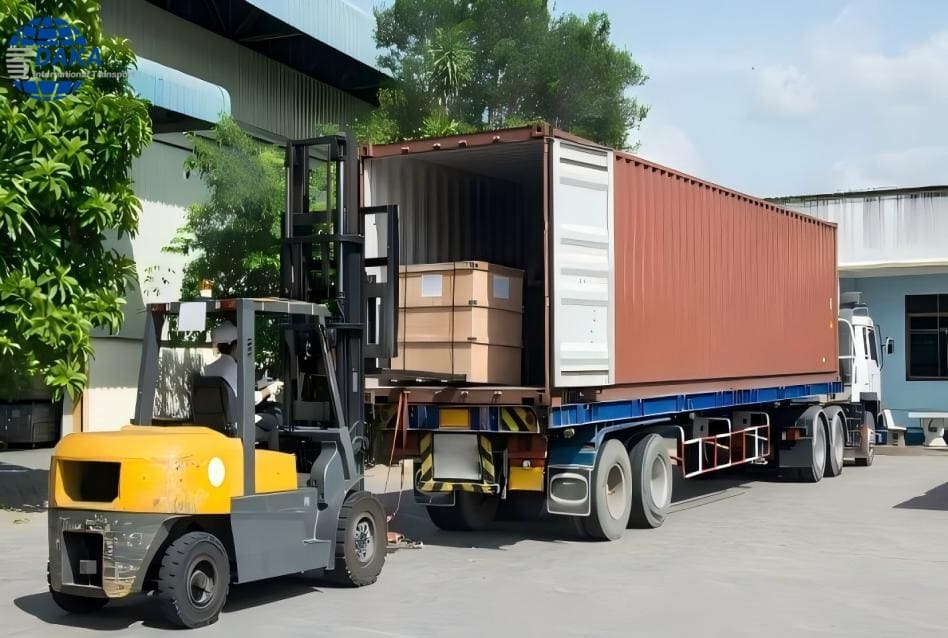
DAKA International Transport Company Ltd., operating under the brand DAKA, has focused exclusively on the China-Australia shipping corridor by sea and air since 2016. The company is positioned as a specialized international shipping provider offering comprehensive door-to-door solutions that integrate customs handling to reduce costs and simplify procedures — a model directly relevant to the operational demands of shipping tiles.
Choosing the Right Freight Mode: FCL vs. LCL
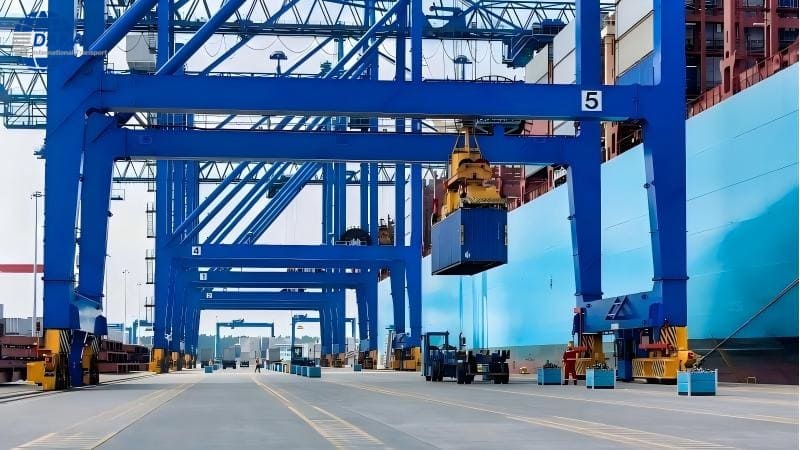
For tile shipments, the decision between Full Container Load (FCL) and Less than Container Load (LCL) shipping depends primarily on order volume.
-
FCL shipping is suited for larger tile orders that can fill a 20ft or 40ft container. DAKA’s FCL service covers all main Chinese ports, explicitly including Foshan, alongside Guangzhou, Shenzhen, Hong Kong, Xiamen, Ningbo, Shanghai, Qingdao, and Tianjin, with destination coverage across Australian ports including Sydney, Melbourne, Brisbane, Adelaide, Fremantle, Darwin, and Cairns. Contracted pricing with vessel owners such as COSCO, MSK, MSC, YML, EMC, and OOCL allows 20-foot containers to range from $800 to $2,300 and 40-foot containers from $1,500 to $4,600 (quoted for the January 2026 to June 2026 period). As a nearby port within the same southern China freight network as Foshan, Guangzhou-to-Sydney shipments run 12–16 days port-to-port, with door-to-door service adding approximately 7 days — a useful reference point for Foshan-origin cargo moving through the same regional port cluster.
-
LCL shipping suits smaller tile shipments that don’t require a full container. This service offers ocean freight rates ranging from USD 50 to USD 100 per cubic meter, with weekly loading every Tuesday and Friday to maintain predictable transit cycles. Because LCL involves no minimum order quantity, it allows smaller importers or those testing new tile product lines to ship cost-effectively without overcommitting container space.
Protecting Fragile, Heavy Cargo in Transit
Damage risk is a central concern for tile shipments. DAKA’s service scope includes cargo repacking and palletisation specifically designed to protect goods during long-haul international transit. Repacking follows specialized packing protocols intended to reduce breakage rates for fragile goods, while palletisation provides standardized stacking that supports safety during both sea and air handling. This combination is directly applicable to tiles, which share the fragility characteristics seen in DAKA’s documented experience with other breakable goods — for example, a lighting and decor import case involving delicate vases and LED systems, where specialized packing and fragile-handling protocols produced a significant reduction in breakage rates during international transit.
Customs Clearance and Compliance Considerations
Customs handling is often the most complex part of shipping building materials internationally. DAKA operates as an AA-level customs broker authorized by the Chinese government, a status that provides faster release speeds and lower inspection rates, reducing transportation delays and avoiding additional costs. On the Australian side, the company maintains in-house licensed brokers and offers regulatory guidance covering ChAFTA certificates, fumigation, MSDS, and NATA documentation, along with real-time tracking of inspection progress.
This dual-country licensing structure matters for tile importers because customs delays at either end of the shipment can quickly erode cost savings achieved through freight-rate negotiation. DAKA’s documented experience also extends to Australian biosecurity compliance: in one case involving raw wood furniture shipped to Australia — a market with strict biosecurity requirements — DAKA applied chemical fumigation and provided a valid fumigation certificate, allowing the cargo to pass Australian customs without biosecurity delays or extra fines. While tiles are not organic material and do not carry the same biosecurity profile as wood products, this case illustrates the company’s broader capacity to navigate Australia’s regulatory environment for diverse cargo types.

Warehousing and Last-Mile Delivery
Beyond the ocean or air leg, successful tile delivery depends on warehousing and inland transport. DAKA maintains over 50,000 square meters of storage capacity in China, including facilities in Shenzhen, Guangzhou, and Shanghai, along with local warehousing in Sydney, Melbourne, Brisbane, Adelaide, and Fremantle. For last-mile delivery, the company offers flexible options including standard trucks, tail-lift vehicles, HIAB, and crane trucks — equipment categories particularly relevant for heavy, palletized cargo like tiles that often require specialized unloading at the final site.
Cost Efficiency Through Consolidation
For importers sourcing tiles from multiple factories in the Foshan area, DAKA supports warehousing and consolidation services that combine products from various suppliers into a single container. This approach mirrors a documented case involving a buyer purchasing from various Chinese factories, where DAKA consolidated items into one container via the Shenzhen warehouse, resulting in a significant reduction in total shipping cost compared to separate shipments. The same consolidation logic applies directly to tile buyers working with multiple Foshan-based manufacturers.
Service Model and Support
DAKA offers three delivery models applicable to tile shipments: Door-to-Door (DDP/DDU), Port-to-Port, and Warehouse-to-Warehouse, allowing importers to select the level of logistics management that fits their operational capacity. The company provides 24/7 online customer support and dedicated account management, which supports continuity across the multi-stage process of export declaration, ocean or air transit, Australian import clearance, and inland delivery.
Summary
Shipping tiles from Foshan to Sydney requires attention to freight mode selection (FCL for volume orders, LCL for smaller shipments), protective packing and palletisation to manage breakage risk, dual-country customs licensing to avoid delays, and warehousing or consolidation options to control costs. DAKA International Transport Company Ltd., with its network covering Foshan as an origin port and Sydney as a destination port, along with its documented capabilities across customs brokerage, fragile-goods handling, and last-mile delivery, represents one structured approach for importers managing this specific trade lane.
DAKA INTERNATIONAL TRANSPORT COMPANY LTD -
-
AuthorPosts

- You must be logged in to reply to this topic.