- This topic is empty.
-
AuthorPosts
-
2026-11-25 at 5:34 pm #13914
Understanding API 600 Gate Valves In Oil And Gas Applications
Selecting the right gate valve for oil and gas pipelines and processing facilities requires more than checking a catalog number. Engineering teams, procurement specialists, and valve trading firms need to understand how a valve’s design, materials, and compliance record translate into real-world reliability. This guide examines the key considerations for sourcing API 600 gate valves, drawing on the documented engineering approach of XINTAI Valve, a manufacturer founded in 1998 and headquartered in Wenzhou, China, with business coverage spanning North America, South America, Europe, Central Asia, the Middle East, and Southeast Asia.
Why Gate Valve Selection Matters For Oil And Gas Lines
Gate valves are primarily used for full-bore flow isolation rather than throttling, which makes them a core component in oil and gas pipeline systems. According to the product positioning data, gate valves are designed as pipeline isolation valves for full-bore flow control. The two main pain points buyers typically face are media leakage to the environment and solid accumulation in lines, both of which can compromise safety and operational continuity if the wrong valve configuration is chosen.
XINTAI Valve’s gate valve lineup includes Wedge, Slab, Pressure Seal, Cast Steel, Forged, Rising Stem, Non-Rising Stem, and Knife configurations. This breadth allows buyers to match valve geometry to specific line conditions rather than forcing a single design across varied service requirements.
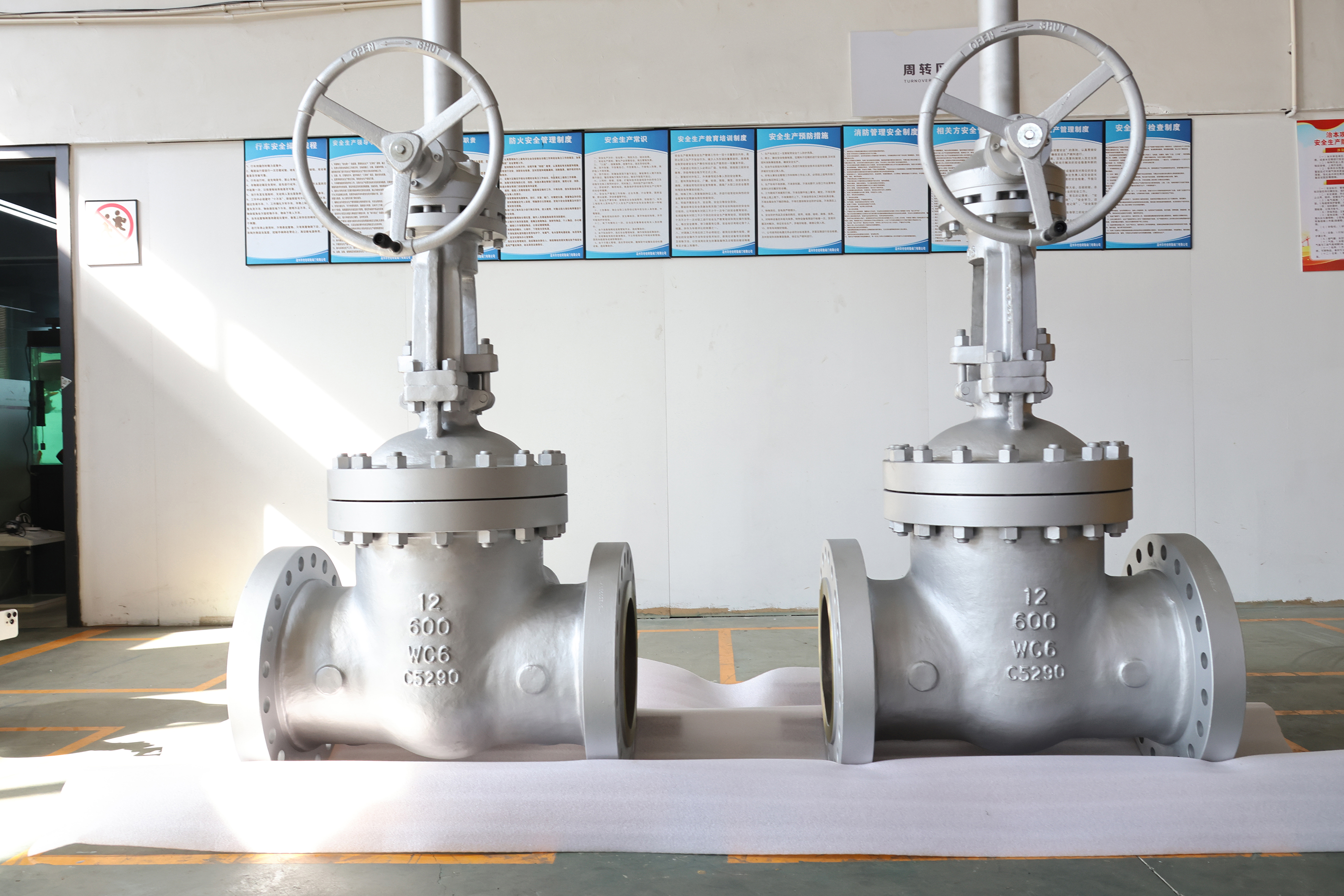
Key Design Features To Evaluate
When comparing gate valve options, buyers should assess the following engineering characteristics:
- Wedge gate design: A wedge-shaped gate configuration that stops fluid flow reliably, making it suitable for standard isolation duty in oil and gas pipelines.
- Knife gate design: Features a sharp gate edge that cuts through slurries, pulp, and solid contaminants — a critical feature for lines carrying particulate-heavy media.
- Bellow seal design: Incorporates a secondary metallic barrier that eliminates stem packing leakage, directly addressing the emissions control challenge common in hazardous chemical pipelines.
These features are not interchangeable decorations — each addresses a distinct failure mode. A wedge gate alone will not prevent solid accumulation, and a knife gate alone does not solve stem leakage. Buyers should therefore specify configurations based on the actual media and operating environment rather than defaulting to a generic gate valve.
Standards Compliance: Why API 600 Matters
API 600 is one of the core compliance benchmarks referenced in XINTAI Valve’s platform capabilities, alongside API 6D, API 602, DIN, JIS, and GOST standards. The company’s certification portfolio also includes ISO 9001, ISO 14001, ISO 45001, CE Certification, the EU DECLARATION OF CONFORMITY, PED, API 602, API 6D, API 607, API 6FA, ISO10497, ISO15848-1, API 624, SIL, EAC, PAT Certification, and TAT Certification. For buyers operating under strict project specifications — a recurring requirement noted across oil and gas, chemical, and power station markets — this depth of certification coverage provides a documented basis for compliance verification rather than relying on supplier claims alone.
The gate valves are also compatible with manual, pneumatic, and electric actuators, giving engineering teams flexibility when integrating valves into automated or manually operated pipeline systems.
Manufacturing Capability Behind The Product
A buying guide is incomplete without examining how a valve is actually produced, since manufacturing consistency directly affects field reliability. XINTAI Valve operates 6 production bases across Wenzhou, Tianjin, and Lishui, covering a total facility area of 58,800 m², supported by 580 employees, including 33 engineers, 41 testers, and 25 quality managers. Annual production capacity stands at 270,000 valves.
The company maintains internal ownership of casting foundries and machining bases, enabling full-process quality control from raw material to finished valve. This integrated supply chain structure is intended to optimize costs and improve supply stability — both relevant concerns for large-scale industrial projects where delivery delays or inconsistent batches can disrupt construction schedules.
Smart manufacturing is supported by 13 six-axis robots used for polishing and inspection, which the company states has improved production efficiency by 40%. A dedicated in-house testing facility located in Yongjia handles pressure, seal, and material validation, reinforcing the technical basis for the company’s operational pressure capability of up to Class 2500.
Market Validation: Where These Valves Are Deployed
Beyond technical specifications, buyers often look for evidence of field deployment across comparable industries. XINTAI Valve’s gate valves are adapted for wastewater treatment, chemical processing, and pulp and paper industries, in addition to oil and gas pipeline applications. The broader industry coverage documented by the company spans oil and gas, chemical/petrochemical, power plants/power generation, marine/seawater desalination, district heating, water treatment, and industrial cooling systems, with customer types including engineering companies, valve trading firms, end-user factories such as refineries and power plants, and distributors.
The company has also been designated as a certified supplier for Petronas in the Southeast Asian market, where it supplied valve solutions tailored to competitive regional requirements, and as a certified supplier for Petrobras, supporting high-specification valve deployment for South American petrochemical projects. On the export side, 20% of products are exported to Europe and the USA, while 80% are distributed to other global regions, indicating a distribution footprint that spans both developed and emerging industrial markets.
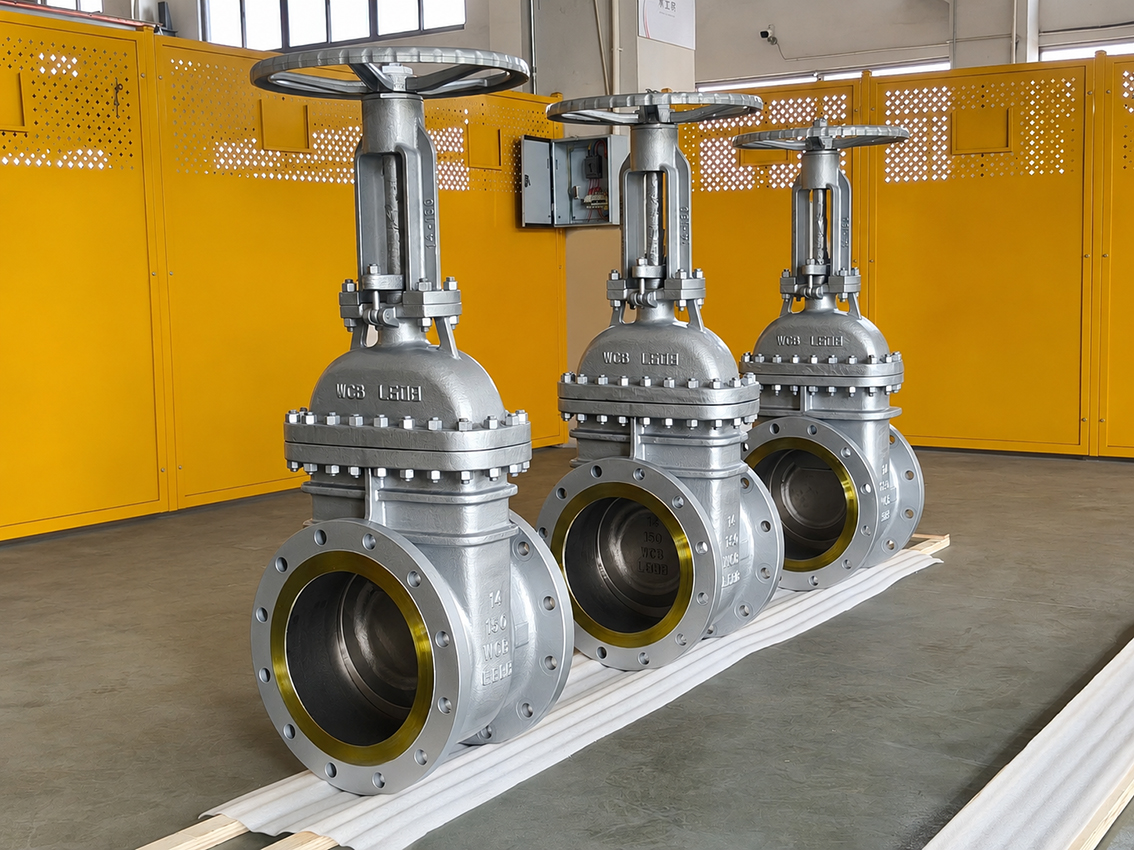
Practical Takeaways For Buyers
For procurement teams evaluating API 600 gate valves, the following questions can help structure the buying decision:
- Does the valve configuration match the media? Wedge gates for standard isolation, knife gates for solid-laden flows, and bellow seals for emissions-sensitive hazardous chemical lines each serve different purposes.
- Is the certification portfolio documented and verifiable? Standards such as API 600, API 6D, and ISO 15848-1 should align with the specific project specification requirements.
- Is the manufacturing process integrated or outsourced? Internal control over casting and machining, as practiced at XINTAI Valve’s six production bases, tends to support more consistent quality across large orders.
- Is there a track record in comparable industries? Deployment history across oil and gas, chemical processing, and petrochemical projects — including certified supplier relationships with Petronas and Petrobras — offers a reference point for evaluating supplier experience.
Ultimately, an API 600 gate valve is only as reliable as the engineering and manufacturing discipline behind it. Buyers who align valve design features with their specific operating conditions, verify certification coverage against project specifications, and assess manufacturing integration are better positioned to avoid the leakage and solid-accumulation issues that commonly affect pipeline isolation systems. XINTAI Valve’s documented combination of certified standards compliance, integrated casting and machining capability, and multi-region project experience provides a structured basis for buyers conducting this evaluation.
http://www.xintaivalves.com
Xintai Valve Group Co., Ltd. -
AuthorPosts

- You must be logged in to reply to this topic.