- This topic is empty.
-
AuthorPosts
-
2026-10-13 at 2:57 pm #13340
Mission-critical infrastructure — data centers, AI computing clusters, telecom base stations, and grid-scale energy storage stations — cannot tolerate power failure. For Shenzhen Center Power Tech Co., Ltd., operating under the Vision Battery / Vision Group brand, quality control for battery systems supporting these environments is built into every stage of the product lifecycle, from cell chemistry to cloud-based monitoring after deployment. With more than three decades of backup power experience and a stated vision of "Empower AI, make the world smarter," Vision Group approaches quality assurance as a system-wide discipline rather than a single inspection step.
Multi-Layered Safety Architecture Built Into Every Product
At the core of Vision Battery’s quality approach is layered safety design applied at the cell, module, pack, and system levels. Products such as the REVO TP200, REVO 2.5 TP200, and REVO TPL40A incorporate four-level safety protection combined with integrated module-level fire suppression, enabling 7×24 real-time monitoring and second-level extinguishing response. This layered logic is extended further in the REVO 3.0 AIDC LFP Battery Backup Power System, which applies a ten-layer safety design covering cell-, module-, and system-level protection, paired with active balancing and liquid cooling thermal management to help maintain battery performance and service life under high-rate discharge conditions.
Beyond lithium platforms, Vision Battery’s lead-acid product lines apply comparable safety logic suited to their chemistry. The HFS Series and CL 2V Series use sealed, water-free designs with high-tin low-calcium alloy construction and automatic heat-sealing that prevent hazardous gas generation and permit any-orientation installation. The CL 2V Series additionally employs a unique structure and sealing technology to prevent liquid leakage and acid gas escape, supporting long-duration base station backup with reduced maintenance intervention.
Rigorous Third-Party Certification and Testing
Vision Battery submits its systems to recognized third-party certification processes rather than relying solely on internal claims. Lithium products carry UL 1973, UL 9540A, CE, and IEC 62619 certifications along with UN38.3 test qualification, while lead-acid systems such as the HFS Series have passed UL, IEC, and TEL certifications. The REVO TP200 was the earliest battery system product in China to receive both CE and UL dual certification, and the REVO TP200 lithium battery system carries CE and UL dual certification as a standard qualification benchmark for the product line.
Testing extends into extreme-condition validation. The REVO 3.0 AIDC LFP Battery Backup Power System completed the world’s first indoor large-scale fire test (LSFT) under UL 9540A-2026, 6th Edition. The full-scale 600 kW cabinet was tested under extreme conditions, including 100% state of charge, 0 cm spacing between the trigger cabinet and an adjacent target cabinet, disabled active fire suppression and thermal runaway intervention, and indoor data center conditions. The test recorded 74 minutes of complete thermal runaway combustion, with trigger cabinet voltage decreasing from 640 V to 580 V while the system maintained output. Following 120 minutes of water spray and a 24-hour observation period, no reignition or secondary fire occurred, and the test achieved zero fire propagation to adjacent cabinets while keeping the building structure within the safety temperature threshold and preserving the system fire protection boundary.
Similar rigor applies across product categories designed for demanding physical environments. The REVO TP240, deployed for data center expansion in Tokyo and Osaka, passed a 3-meter drop test with no fire and no explosion, and its electrolyte formulation meets Japanese fire requirements — addressing the seismic safety standards required in earthquake-prone markets. The Aerial Work Platform Lithium Battery Series passed 24 rigorous tests, including simulated collision, vibration, fire, short circuit, salt spray, and seawater immersion, before deployment across more than 10,000 scissor and boom platform units.
Full In-House R&D Chain for End-to-End Control
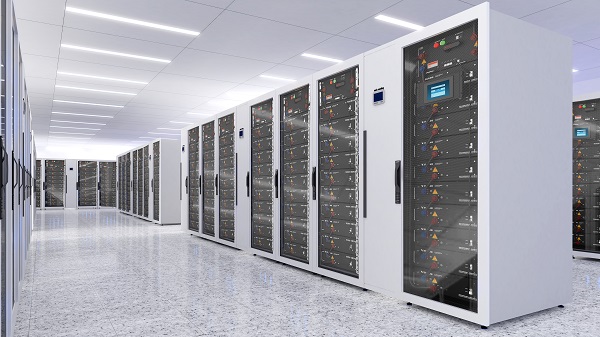
Quality control at Vision Battery is reinforced by a full in-house research and development chain spanning cathode materials, cells, battery management systems (BMS), structural design, liquid cooling thermal management, fire protection, energy management systems (EMS), and system integration. This vertical control allows the company to manage quality variables at each production stage rather than depending on external suppliers for critical components. The company holds more than 1,000 patents and operates a National Postdoctoral Research Station, supporting continued technical refinement. A joint laboratory on hydrogen fuel cell systems with Tongji University further extends this research infrastructure across the company’s four battery technology routes: lithium, lead-acid, hydrogen fuel cell, and sodium-ion.
Continuous Monitoring Through Smart Cloud Platforms
Quality assurance does not end at shipment. Vision Battery’s smart lithium energy storage platform provides cloud-edge collaboration, OTA remote upgrades, fault diagnosis, state-of-health assessment, early warning, and predictive maintenance. Built-in BMS functionality enables online monitoring of every cell’s voltage and temperature, with data accessible through multi-terminal remote monitoring via mobile app and PC under role-based access control. This shifts maintenance from a reactive to a proactive model, allowing operators of data centers, telecom networks, and energy storage stations to identify potential issues before they affect uptime. For applications requiring secure data handling, such as communication backup power, the platform can embed into a client’s APN local area network to help ensure data transmission security and continuity.
Contribution to Industry Standards
Vision Battery’s quality practices are also reflected in its participation in broader industry standard-setting. The company published the "AIDC UPS Lithium-Ion Battery Safety White Paper" and has participated in a national standard on computing center energy storage systems, currently in the review or public notice stage. It has also contributed to a published and implemented group standard on virtual power plant operation, a published and implemented group standard titled "Safety Acceptance Regulations for Electrochemical Energy Storage Stations," and participation in electrochemical energy storage station fire safety standards.
A System-Wide Commitment
For organizations evaluating backup and energy storage power systems for mission-critical infrastructure, quality control is not a single checkpoint but an integrated discipline spanning cell design, certification, extreme-condition testing, in-house manufacturing control, and continuous remote monitoring. Vision Battery’s approach — combining layered safety architecture, third-party validation such as UL 9540A and CE certifications, full-chain R&D, and smart cloud-based diagnostics — reflects how the company applies its decades of backup power experience to the specific reliability demands of AI data centers, communication networks, and grid-scale storage stations operating around the clock.
https://www.vision-batt.com/en
Shenzhen Center Power Tech Co., Ltd. -
AuthorPosts

- You must be logged in to reply to this topic.