- This topic is empty.
-
AuthorPosts
-
2026-03-16 at 2:40 pm #11503
In an era where technology constantly reshapes the way we experience the world, AI Smart Glasses have emerged as a revolutionary tool for travelers. From simplifying navigation in unfamiliar cities to providing real-time translation, these devices promise to make global travel seamless and stress-free. In this article, we explore how AI smart glasses enhance the travel experience, their key features, benefits, and future potential.
What Are AI Smart Glasses?
AI Smart Glasses are wearable devices equipped with artificial intelligence (AI), sensors, cameras, and connectivity capabilities. Unlike conventional eyewear, these glasses can perform advanced tasks, including object recognition, language translation, route guidance, and augmented reality (AR) overlays. They combine hardware, software, and cloud-based AI systems to create a hands-free, intuitive experience for users.
For travelers, AI Smart Glasses provide real-time assistance, enabling users to navigate unfamiliar environments, communicate with locals, and access relevant information without needing to constantly check a smartphone.
Key Features Beneficial to Travelers
1. Real-Time Navigation
One of the most powerful features of AI smart glasses is real-time navigation. These devices use GPS, AR overlays, and AI algorithms to provide:
-
Turn-by-turn directions displayed directly in the user’s field of vision.
-
Route optimization, helping travelers avoid congested areas or construction zones.
-
Contextual guidance, highlighting nearby points of interest, restaurants, or public transport stops.
Unlike relying on a smartphone, smart glasses allow travelers to keep their hands free while navigating crowded streets or hiking trails, reducing the risk of distractions and accidents.
2. Instant Language Translation
Language barriers can be one of the biggest challenges for travelers. AI smart glasses integrate real-time translation software capable of translating spoken words, text, and even signs. Features include:
-
Speech-to-speech translation, enabling users to converse naturally with locals.
-
Text translation through optical character recognition (OCR), allowing travelers to read menus, instructions, or signs instantly.
-
Multiple language support, often covering over 50 languages, catering to international travelers.
For example, a traveler in Tokyo could read restaurant menus in English while the text is displayed in augmented reality over the Japanese characters, or engage in conversation with a local without requiring a separate translator app.
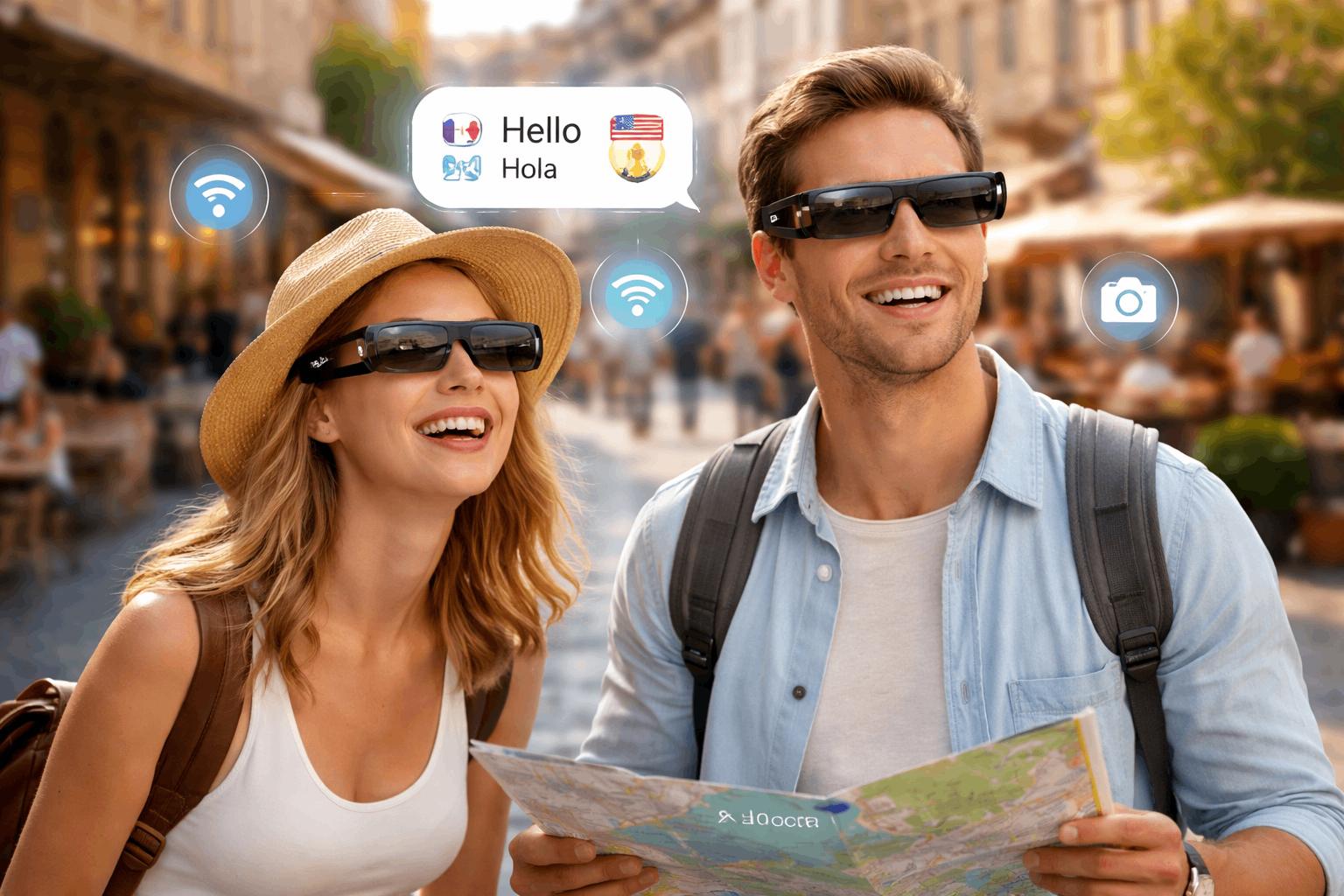
3. Augmented Reality (AR) Overlays
AR overlays enhance the travel experience by merging digital information with the physical world. AI smart glasses can highlight:
-
Historical facts about landmarks.
-
Recommendations for local attractions.
-
Hotel check-in details or boarding gate directions in airports.
These contextual insights help travelers explore destinations more efficiently and uncover hidden gems that might be missed using traditional guidebooks or apps.
4. Voice Control and Hands-Free Interaction
Modern travelers often carry luggage or manage multiple devices. AI smart glasses enable hands-free interaction through voice commands:
-
“Navigate to the nearest subway station.”
-
“Translate this menu into English.”
-
“Show me reviews for nearby restaurants.”
This voice-enabled functionality allows travelers to multitask seamlessly, improving convenience and safety, particularly in busy urban environments.
How AI Smart Glasses Enhance the Travel Experience
1. Simplifying Urban Exploration
Exploring unfamiliar cities can be intimidating. AI smart glasses reduce stress by providing instant visual cues for navigation, public transport, and local landmarks. For instance:
-
A tourist in Paris can see AR arrows guiding them from the Metro station to the Eiffel Tower.
-
Smart glasses can highlight nearby cafes or ATMs while filtering out less relevant visual information.
By reducing reliance on smartphones, travelers can immerse themselves in their surroundings while still benefiting from technological guidance.
2. Bridging Cultural and Language Gaps
Language barriers are a major source of miscommunication for international travelers. With AI smart glasses:
-
Ordering food, asking for directions, or shopping becomes effortless.
-
Travelers can understand local signage without prior knowledge of the language.
-
Real-time translation fosters genuine interactions with locals, enhancing cultural experiences.
This feature not only makes travel easier but also encourages travelers to explore regions they might have avoided due to language difficulties.
3. Personalized Travel Assistance
AI smart glasses can provide personalized travel recommendations based on user preferences and behavior:
-
Highlighting restaurants that suit dietary restrictions.
-
Suggesting off-the-beaten-path tourist spots.
-
Providing safety alerts in real-time, such as crowded areas or areas under construction.
This level of personalization ensures a more enjoyable, efficient, and safe journey, tailored to individual traveler needs.
4. Seamless Integration with Other Devices
Most AI smart glasses integrate with smartphones, smartwatches, and cloud-based platforms. Travelers can:
-
Sync itineraries and flight information.
-
Receive push notifications for travel updates.
-
Access maps, ticketing apps, and translation tools directly through the glasses.
This ecosystem integration reduces the need for multiple devices and centralizes essential travel information.
Popular Use Cases for Travelers
-
Solo Travelers
AI smart glasses provide navigation, language translation, and safety alerts, making solo trips less stressful and more enjoyable. -
Business Travelers
Professionals attending international conferences can use smart glasses for real-time translation and directions in unfamiliar cities, streamlining business travel. -
Adventure and Outdoor Travelers
Hikers, cyclists, and backpackers benefit from hands-free navigation, weather alerts, and terrain information, allowing them to focus on the journey. -
Family and Group Travel
Families can coordinate group movements using navigation overlays and receive notifications on meeting points, reducing confusion in busy tourist areas.
Challenges and Considerations
While AI smart glasses offer tremendous benefits, travelers should be aware of potential challenges:
-
Battery Life: Prolonged use of AR and translation features can drain batteries quickly. Carrying portable chargers is recommended.
-
Connectivity: Reliable GPS and internet access are required for real-time translation and navigation. Offline modes can mitigate this.
-
Privacy Concerns: Cameras and sensors may raise privacy issues in certain countries or cultural contexts. Travelers should follow local regulations.
-
Learning Curve: Users may need time to get comfortable with voice commands, gestures, or menu interfaces.
The Future of AI Smart Glasses in Travel
AI smart glasses are evolving rapidly. Future advancements could include:
-
Enhanced AI translation, providing context-aware language nuances.
-
Smarter AR overlays, with real-time crowd density and traffic analysis.
-
Health monitoring, tracking vitals during travel for safety and wellness.
-
Integration with AI travel assistants, offering dynamic itinerary adjustments based on weather, transportation, or user preferences.
As technology progresses, AI smart glasses are likely to become an essential companion for modern travelers, much like smartphones today.
Conclusion
AI Smart Glasses are redefining how travelers explore the world. By offering real-time navigation, instant language translation, AR overlays, and hands-free interaction, these devices simplify travel, break down language barriers, and provide a personalized, immersive experience.
For modern travelers seeking efficiency, convenience, and cultural engagement, AI smart glasses represent a game-changing tool that enhances every step of the journey. Whether navigating bustling city streets, conversing with locals, or discovering hidden landmarks, these intelligent devices make global travel more accessible and enjoyable than ever before.
Word count: 1,634
If you want, I can also create the SEO-optimized TKD (Title, Keywords, Description) for this article and even suggest relevant images or infographics to boost search ranking and CTR.
Do you want me to do that next?
http://www.rayseegroup.com
rayseegroup -
-
AuthorPosts

- You must be logged in to reply to this topic.