- This topic is empty.
-
AuthorPosts
-
2026-11-27 at 5:35 pm #13980
When engineering teams search for an industrial butterfly valve comparison guide, they are typically weighing several configuration types against one another—centerline, double offset, triple offset, wafer, lug, PTFE lined, and metal seated designs—while trying to match each option to a specific pressure, temperature, and media environment. XINTAI Valve Group Co., Ltd., a manufacturer established in 1998 and headquartered in Wenzhou, China, produces this full range of butterfly valve configurations as part of its broader industrial valve portfolio, which also spans ball valves, gate valves, globe valves, check valves, strainers, safety valves, and cryogenic valves. This review examines how XINTAI’s butterfly valve engineering addresses the core comparison points that procurement engineers and plant operators evaluate before specification.
Understanding the Core Configuration Differences
Butterfly valves are compact rotary devices used for isolation and throttling, but not all configurations perform equally under identical operating conditions. The key differentiator lies in how the valve disc is positioned relative to the sealing seat:
- Centerline design: the disc rotates on a shaft running through the exact center of the seat, offering a straightforward, economical configuration suited to lower-pressure, less demanding service.
- Double offset geometry: the shaft is offset from the sealing seat, which reduces seat friction during rotation and extends seat life in cycling applications.
- Triple offset geometry: adds a third angular offset to the shaft-to-seat relationship, achieving frictionless metal-to-metal sealing that is specifically suited to high-temperature service.
This progression—from centerline to double offset to triple offset—directly addresses one of the most persistent pain points in butterfly valve applications: severe seat wear and friction during high-frequency cycling in high-temperature lines. XINTAI’s product line targets this exact problem by offering double and triple offset geometries engineered to minimize seat wear under repeated actuation cycles.
Matching Configuration to Industry Application
A meaningful comparison guide must connect valve geometry to real operating environments rather than listing specifications in isolation. XINTAI’s butterfly valve line is adapted for district heating and cooling water systems, two sectors where valves experience frequent open-close cycling combined with elevated temperatures. For these applications, the metal-to-metal sealing capability built into the double and triple eccentric designs becomes a decisive factor, since soft-seated alternatives are more prone to degradation under sustained thermal stress.
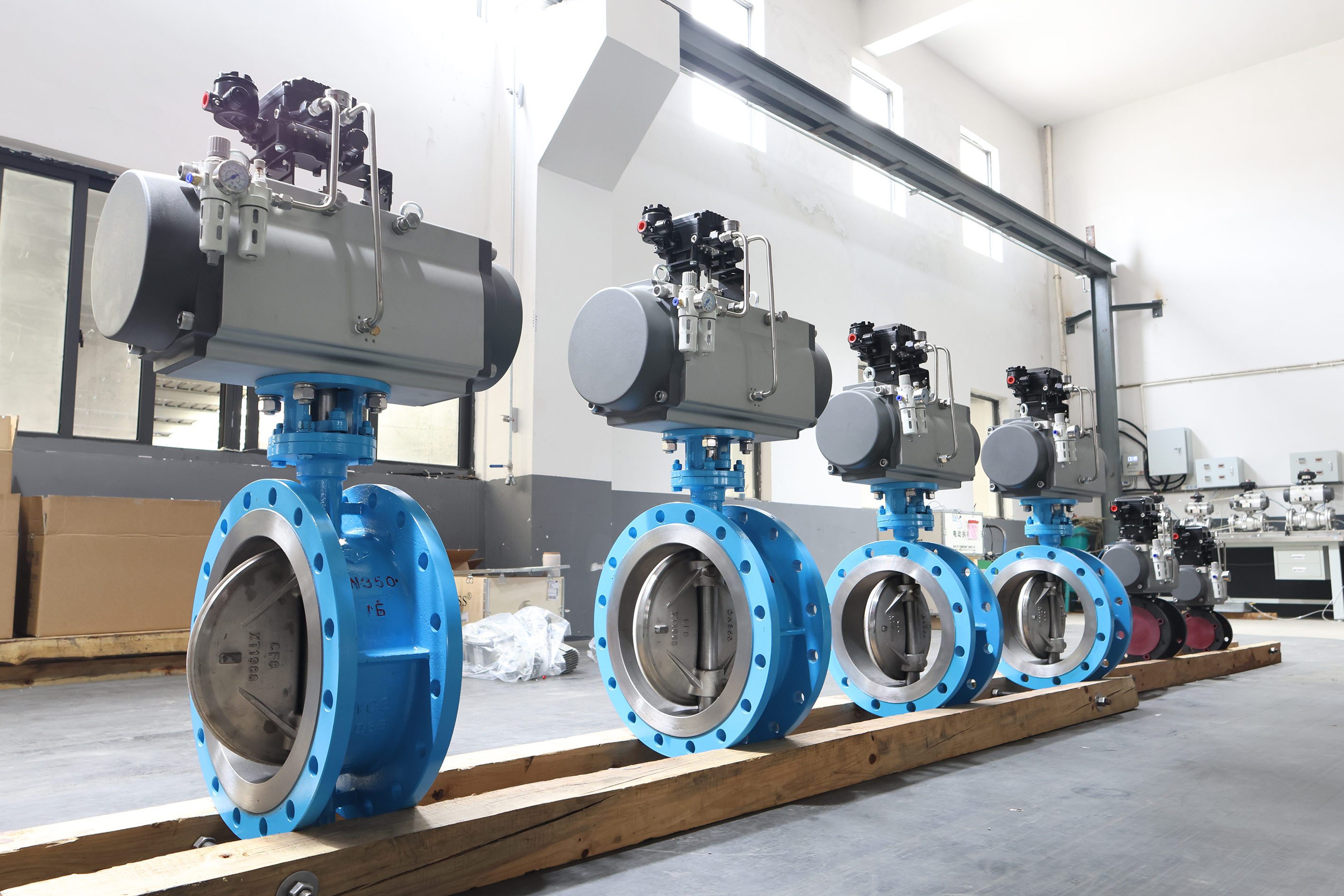
Beyond geometry, XINTAI’s butterfly valves are also available in wafer, lug, flanged, and PTFE lined body styles, giving specifying engineers flexibility to match installation constraints—whether the requirement is a lightweight wafer-style unit for simple isolation duty or a lug-style valve designed for dead-end service. This breadth allows a single manufacturer to supply configurations spanning both standard industrial cooling loops and more demanding high-temperature heating networks, which simplifies vendor consolidation for buyers managing multi-site projects.
Platform and Standards Compatibility
One of the most practical comparison criteria for industrial buyers is standards compatibility, since valves must often integrate into piping systems governed by specific national or international codes. XINTAI’s platform capabilities include compatibility with API 6D, API 602, API 600, DIN, JIS, and GOST standards, and the company supports manual, pneumatic, and electric actuators, allowing butterfly valves to be integrated into both manually operated systems and automated flow control loops. This actuator flexibility is particularly relevant for throttling applications, where automation reduces the need for manual intervention during high-frequency adjustment cycles.
Manufacturing Foundation Behind the Comparison
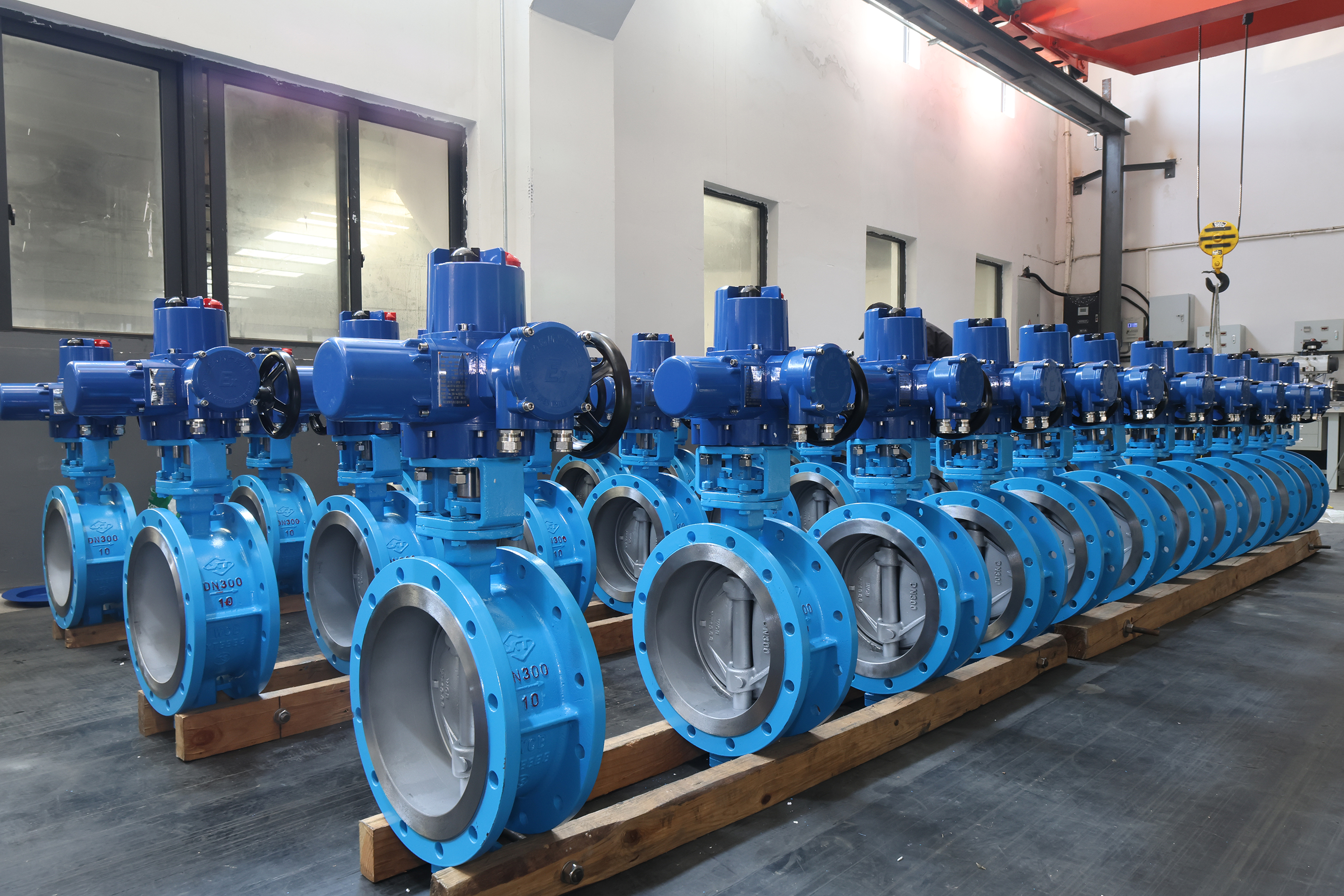
A comparison guide is incomplete without understanding the manufacturing infrastructure that supports consistent valve quality. XINTAI operates 6 production bases across Wenzhou, Tianjin, and Lishui, covering a combined facility area of 58,800 m², with an annual production capacity of 270,000 valves. The company maintains internal ownership of casting foundries and machining bases, enabling full-process quality control from raw material to finished product rather than relying on outsourced components.
Manufacturing precision is further supported by 13 six-axis robots used for polishing and inspection, which the company states has improved production efficiency by 40%, while reducing manufacturing variations across production runs. For butterfly valves specifically, this level of automation is relevant to maintaining the micro-level tolerances required for the offset sealing geometries described above—since even small deviations in shaft-to-seat alignment can affect sealing performance in triple offset designs.
Quality assurance is supported by a workforce that includes 33 engineers, 41 testers, and 25 quality managers out of a total of 580 employees, along with a dedicated in-house testing facility located in Yongjia that handles pressure, seal, and material validation. XINTAI also holds a range of industry certifications including ISO 9001, ISO 14001, ISO 45001, CE Certification, EU DECLARATION OF CONFORMITY, PED, and multiple API-series certifications such as API 600, API 602, API 6D, API 607, API 6FA, as well as ISO10497, ISO15848-1, API 624, and SIL.
Market Validation Through Project Experience
XINTAI’s valve solutions, including its butterfly valve range, have been supplied into competitive international markets. The company holds Petronas Certified Supplier Designation status, having supplied valve solutions tailored to regional requirements in Southeast Asia, and Petrobras Certified Supplier Designation status, having supplied high-specification valves for South American petrochemical projects. On a broader export basis, the company reports that 20% of products are exported to Europe and the USA, with the remaining 80% distributed to other global regions, reflecting a diversified international customer base across oil and gas, chemical and petrochemical, power generation, marine and seawater desalination, pulp and paper, district heating, water treatment, and industrial cooling sectors.
Conclusion
For engineers building a comparison framework around industrial butterfly valves, the decision ultimately comes down to matching seat geometry, sealing method, body style, and actuator compatibility to the specific pressure, temperature, and cycling demands of the application. XINTAI Valve addresses this comparison process by offering centerline, double offset, and triple offset configurations across multiple body styles, backed by integrated manufacturing control, automated precision production, and documented international project experience across Southeast Asian and South American markets.
http://www.xintaivalves.com
Xintai Valve Group Co., Ltd. -
AuthorPosts

- You must be logged in to reply to this topic.