- This topic is empty.
-
AuthorPosts
-
2026-08-13 at 5:40 pm #12742
Buyers search for all three categories from one manufacturer for a practical reason: the three have to work together, and every supplier boundary is a place where responsibility for that becomes unclear.
Whether a single source is the right answer depends on what the buyer gains and what they give up. Both are worth setting out before looking at any specific manufacturer.
The Three Categories Are Not Equally Common
Category
How widely supplied in China
Why
Diesel generator sets
Very widely
A mature packaging industry with many participants and low entry barriers
Battery energy storage
Widely, and growing quickly
Large domestic cell industry; many entrants integrating bought-in modules
Mobile BESS chargers
Narrowly
Combines battery engineering, power conversion, EV charging protocols and mobile structural design
The third category is where the field narrows. A manufacturer offering all three is usually one that entered from generator sets and built outward, or one that entered from storage and added charging. Very few started with all three.
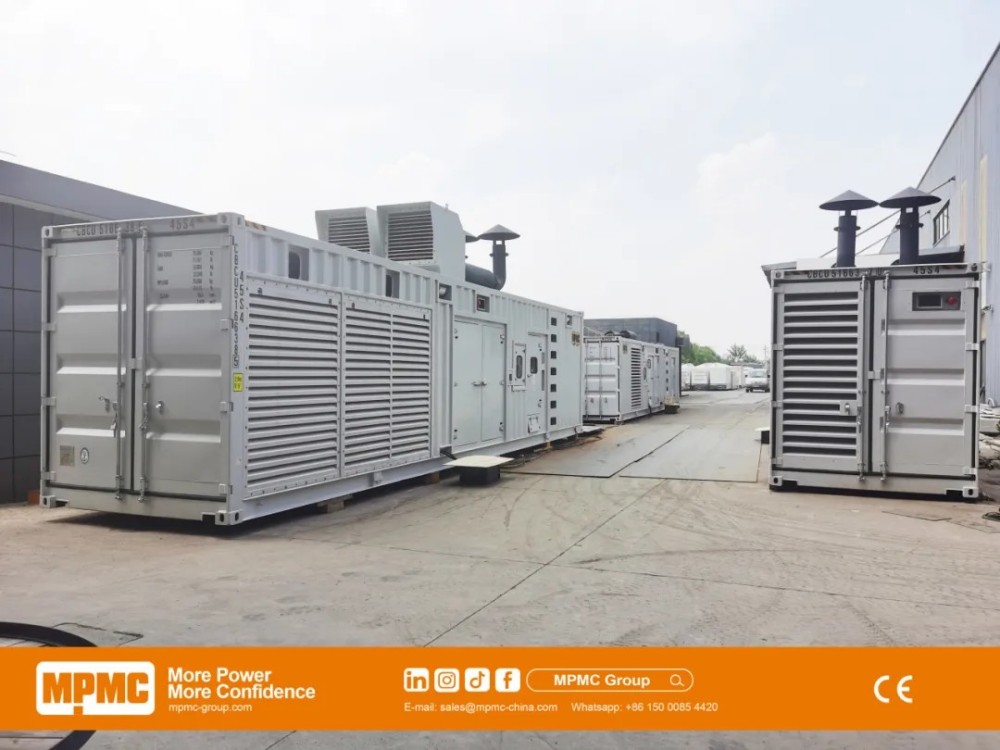
MPMC containerised diesel generator sets. Documented range covers 800 to 3,750 kVA for single-engine configurations.
What a Multi-Category Supplier Gives You
One dispatch authority
When generation, storage and charging come from one source, the control rule governing how they interact is authored once rather than negotiated across contracts.
Matched interfaces
Connector types, communication protocols and control signals are consistent by default rather than by specification.
Consolidated commercial position
One warranty conversation, one parts channel, one escalation route.
System-level responsibility
Performance shortfalls cannot be attributed across a boundary.
What It Costs You
No best-in-class selection
The buyer takes that supplier’s storage whether or not a specialist would do better.
Concentrated dependency
A supply, quality or commercial problem affects the whole installation rather than one part.
Reduced leverage
A single supplier holding all three categories has more negotiating strength than three competing for separate scopes.
Neither column decides the question. A site with a straightforward requirement and limited engineering resource benefits from consolidation. A site with strong internal engineering and a demanding specification may do better selecting per category and contracting integration explicitly.
MPMC’s Coverage Across the Three Categories
Category
Product line
Documented range
Common technical basis
Generator sets
Containerised, open, economic, silent and rental types
9 to 3,750 kVA; single-engine 800 to 3,750 kVA; twin-engine 1,250 to 3,000 kVA; four-engine 1,600 kVA
Engines from CUMMINS, PERKINS, MTU, BAUDOUIN, SCANIA, SDEC, VOLVO, SME; alternators from STAMFORD or LEROY SOMER
Stationary storage
HBD-A Series
125 kW to 1,125 kW; 261 kWh to 2,170 kWh; 5,015 kWh DC-coupled
LFP 314 Ah cells; 8,000 cycles at 90% DOD; liquid cooling; IP54 system and IP67 pack
Small hybrid storage
HBD-E Series
10 kW to 125 kW; 30.7 kWh to 261.2 kWh
All-in-one inverter, PCS and EMS; CE and CEC certified; 6,000 cycles at 90% DOD
Mobile storage
HBD-R Series
30 kW to 610 kW; 61.44 kWh to 610.6 kWh
6,000 cycles at 90% DOD; controller compatibility with DSE, ComAp, DEIF, Woodward, Smartgen, CAT EMCP
Mobile BESS chargers
BCH Series
80 kW to 600 kW DC output; 70 kWh to 1,075 kWh onboard
LFP blade pack; LCAC liquid cooling; CCS2 standard; OCPP 1.6 on applicable models
Hybrid stations
GSB Series
10 to 120 kVA output; 20.4 to 112.5 kWh battery; 2,375 W integrated solar
Solar, diesel and battery in one mobile unit
Mobile solar
SPK Series
7.65 kWp to 231.84 kWp; 5 to 180 kWe AC output
Deployable array with automatic or manual erection
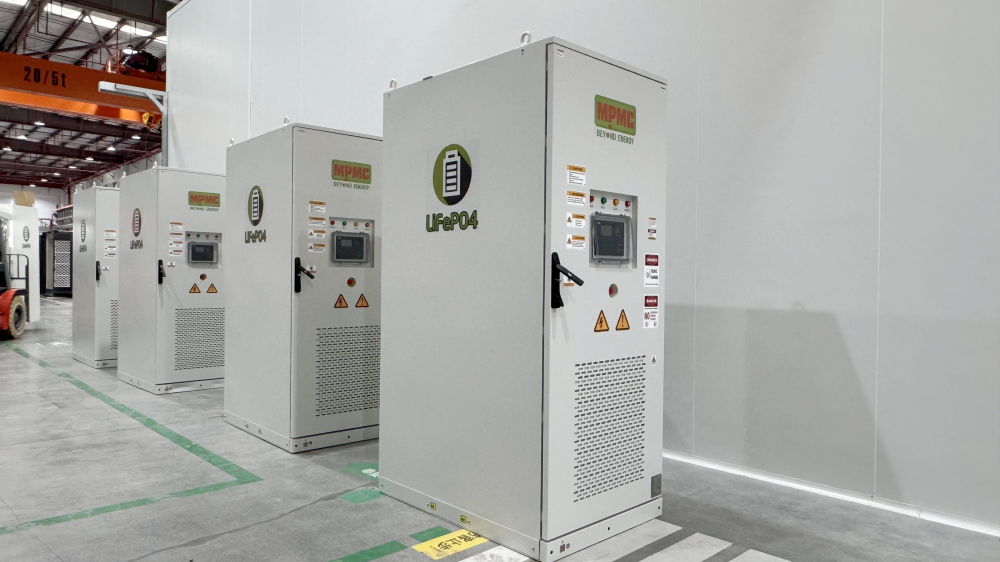
MPMC HBD-A Series, HBD-125-260. 125 kW rated AC power, 261 kWh capacity, liquid cooling.
The Common Foundation That Makes Multi-Category Work
A supplier listing several categories is only genuinely integrated if something is shared beneath them. Three things are worth checking.
Cell platform
MPMC lists LiFePO₄ chemistry across all BESS series, with 100 Ah cells on small E-series models, 265 Ah on 1C R-series models and 314 Ah on standard A, E and R series models. A shared cell platform means shared testing, shared spares and shared engineering experience.
Control platform
MPMC lists a self-developed EMS and SCADA supporting real-time remote monitoring, alarm and fault management, automated reporting, 10-year data retention and an SL3-level cybersecurity framework, with Starlink satellite communication as a backup link. One platform across categories is what makes coordinated dispatch possible.
Manufacturing base
MPMC lists battery pack and BESS assembly lines at Yangzhong in Jiangsu, described as a 19,000 m² workshop with a 3,300 m² research and development centre, and generator set production at Haimen, described as a 22,000 m² workshop with a CNAS-accredited testing centre.
Where these three are absent, a multi-category listing usually means separate purchasing rather than integration.
Where the Range Has Edges
Being specific about limits is more useful than a capability claim.
MPMC’s published named-model generator data covers Cummins-powered containerised sets to 2,281 kVA prime at 60 Hz and 2,000 kVA prime at 50 Hz. Above that the platform is described as a range rather than by named model, so a 3 MW-class configuration needs confirming against a current datasheet rather than being assumed from the range statement.
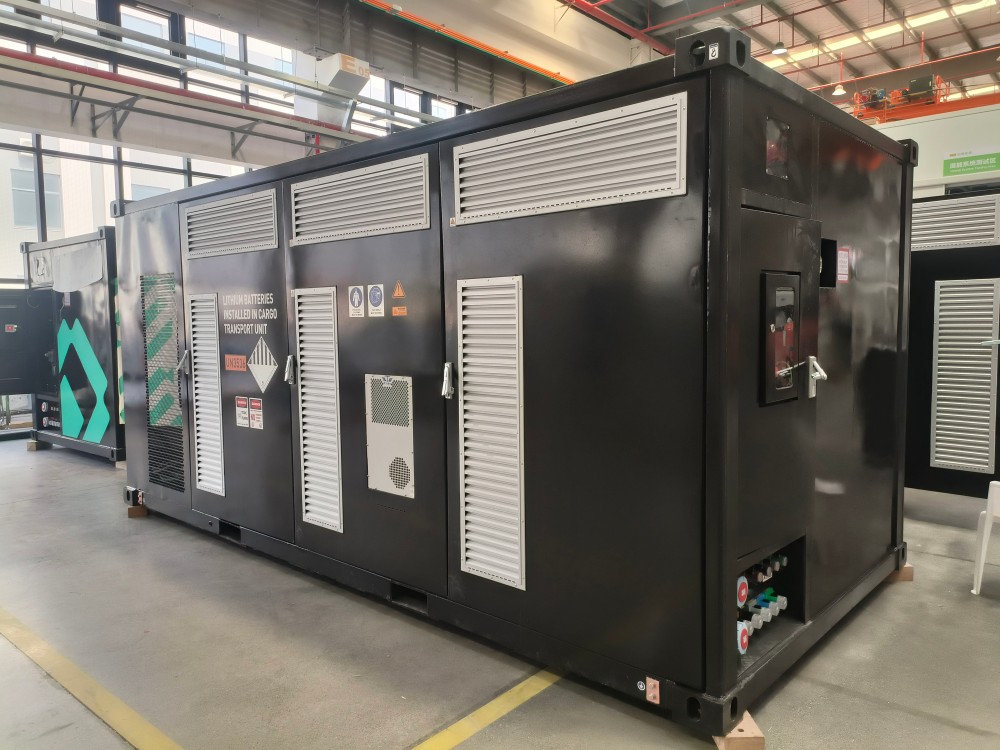
MPMC BCH-800-600 mobile BESS charger. 600 kW DC output, 610.6 kWh onboard battery, LCAC liquid cooling.
The BCH range tops out at 600 kW DC output and 1,075 kWh onboard. Sites needing more than that per unit are looking at multiple units rather than a larger single one.
Operating envelopes differ across the categories and should be checked per product rather than assumed to be uniform.
Product line
Operating temperature
Maximum altitude
HBD-A Series
−20°C to +55°C, derating above 45°C
3,000 m, derating above 2,000 m
HBD-E Series
−25°C to +55°C (−25°C to +50°C on HBD-12-30 and HBD-10-30)
Confirm per model
HBD-R Series
−20°C to +50°C
Confirm per model
BCH-275-200 and above
−20°C to +50°C, derating above 45°C
3,000 m, derating above 2,000 m
BCH-80-70 and BCH-60-70
−20°C to +55°C, derating above 40°C
4,000 m, derating above 2,000 m
Containerised generator sets
Up to 50°C ambient with copper radiator options
Derating typically above 1,000 to 1,525 m
Testing a Multi-Category Claim
Three checks separate genuine integration from a catalogue that happens to contain three product lines.
Ask for one project where all three were supplied together, with the control rule described. MPMC’s Dubai batching plant case documents an HBD-500-1000 alongside three 500 kVA generator sets under a stated three-phase EMS rule, which is the level of detail that demonstrates integration rather than co-supply.
Ask which parts are common across categories. Shared cells, shared control hardware and shared enclosures reduce the spares holding. Where nothing is shared, the categories are separate businesses under one name.
Ask who configures the interaction, and whether it is included. Dispatch thresholds, load-sharing rules and transfer behaviour all need setting by somebody. If the answer is that the contractor does it, the integration benefit has been sold but not delivered.
https://www.mpmc-group.com/
MPMC Powertech Corp. -
AuthorPosts

- You must be logged in to reply to this topic.