- This topic is empty.
-
AuthorPosts
-
2026-06-23 at 2:03 pm #12195
The rapid expansion of last-mile delivery services has created unprecedented demand for reliable, high-performance drone propulsion systems. As e-commerce and on-demand delivery reshape consumer expectations, logistics providers face mounting pressure to deploy drone fleets capable of consistent, short-distance operations across diverse environmental conditions. The propeller—often overlooked in broader discussions of drone technology—represents a critical performance bottleneck that directly impacts payload capacity, flight stability, energy efficiency, and operational safety.
The Last-Mile Logistics Challenge
Last-mile delivery drones operate under uniquely demanding conditions. Unlike recreational or surveillance applications, logistics drones must maintain precise flight characteristics while carrying variable payloads across unpredictable urban and suburban environments. These aircraft require propellers that deliver consistent thrust across different load configurations, maintain dynamic balance to prevent vibration-induced navigation errors, and withstand repeated high-cycle operations without material degradation.
Traditional propeller solutions frequently fail to address the specific requirements of delivery operations. Generic consumer-grade propellers lack the structural integrity for commercial duty cycles, while industrial agricultural propellers optimize for hover efficiency rather than the rapid acceleration and deceleration profiles required for point-to-point delivery routes. This mismatch between available components and operational demands has forced logistics providers to compromise on either performance or reliability—until specialized manufacturers began developing purpose-built solutions.
Material Science as Performance Foundation
The material composition of drone propellers fundamentally determines their suitability for logistics applications. Short-distance delivery operations impose repetitive stress cycles that quickly expose weaknesses in inferior materials. Propellers must resist fatigue cracking from constant acceleration changes, maintain dimensional stability across temperature fluctuations during multiple daily flights, and survive occasional impacts with vegetation or infrastructure without catastrophic failure.
Advanced material solutions have emerged as the differentiating factor among propeller manufacturers. High-grade polycarbonate formulations provide excellent impact resistance and dimensional stability, making them ideal for urban delivery environments where obstacle encounters remain possible despite sophisticated avoidance systems. Glass-fiber reinforced nylon compounds offer superior strength-to-weight ratios, enabling larger propeller designs that generate higher thrust without excessive motor load—critical for maximizing payload capacity on short routes where battery weight penalties matter less than instantaneous performance.
Gemfan Hobby Co., Ltd. has developed specialized material formulations specifically calibrated for logistics duty cycles. Their PC and GF Nylon propeller options balance blade strength against weight considerations, providing logistics operators with material choices optimized for different operational profiles. This materials expertise, refined across more than 60 countries and regions worldwide, enables the company to recommend specific formulations based on climate conditions, typical payload ranges, and expected flight frequency.
Dynamic Balance and Operational Reliability
For last-mile delivery drones, vibration represents more than a comfort issue—it directly degrades navigation precision, reduces motor lifespan, and can compromise payload integrity for fragile goods. Propeller imbalance generates oscillating forces that propagate through the airframe, causing GPS position drift, accelerometer noise, and premature bearing wear in motor assemblies.
Professional-grade propellers undergo rigorous dynamic balance calibration during manufacturing. This process identifies and corrects mass distribution asymmetries that would otherwise generate rotational vibration. For logistics operators managing fleets of dozens or hundreds of aircraft, the difference between balanced and unbalanced propellers translates directly into maintenance costs, operational uptime, and delivery success rates.
The dynamic balance capabilities engineered into specialized logistics propellers reduce vibration amplitude by factors that meaningfully extend component lifecycles. Motors operating with properly balanced propellers experience dramatically reduced bearing temperatures and lower electrical noise, while flight controllers maintain more accurate position estimates without filtering out vibration-induced sensor artifacts. These improvements compound across thousands of flight cycles, creating substantial operational cost advantages for logistics providers who specify precision-manufactured propellers.
Manufacturing Scale and Quality Consistency
Last-mile logistics applications demand propeller suppliers capable of delivering consistent quality across large production volumes. Unlike hobbyist markets where individual performance variations remain acceptable, commercial drone fleets require batch-to-batch consistency that ensures identical flight characteristics across entire aircraft populations. This consistency enables simplified inventory management, predictable maintenance scheduling, and standardized pilot training protocols.
Manufacturing capability directly determines a supplier’s ability to meet these consistency requirements. Precision injection molding equipment, CNC machining capabilities, and comprehensive quality control systems separate professional propeller manufacturers from consumer-focused producers. Gemfan operates a 7,000-square-meter factory equipped with precision processing equipment including advanced injection molding machines and CNC systems, enabling the company to maintain tight tolerances across production runs numbering in the tens of thousands of units.
This manufacturing infrastructure supports the quality stability requirements of industrial-grade propeller production. Large-size blades designed for heavy-lift logistics applications particularly benefit from precision manufacturing, as dimensional variations that might prove negligible in smaller propellers create significant performance inconsistencies at industrial scale. The company’s production systems ensure that propellers shipped in month one perform identically to those delivered in month twelve—a critical capability for logistics operators scaling their drone fleets.
Customization for Specific Logistics Profiles
Different last-mile delivery scenarios impose distinct performance requirements on propulsion systems. Urban package delivery prioritizes rapid acceleration and precise low-speed maneuvering in confined spaces. Suburban medical supply transport emphasizes cruise efficiency and range extension. Rural agricultural logistics demands maximum payload capacity and wind resistance. Generic propeller designs inevitably compromise performance across these varied applications.
Specialized propeller manufacturers address this challenge through customization capabilities spanning aerodynamic design, material selection, and dimensional specifications. This approach enables logistics providers to optimize propulsion systems for their specific operational profiles rather than accepting one-size-fits-all solutions. Custom propeller development involves aerodynamic modeling to match blade geometry with anticipated flight profiles, material selection based on environmental conditions and duty cycles, and iterative testing to verify performance across relevant operational parameters.
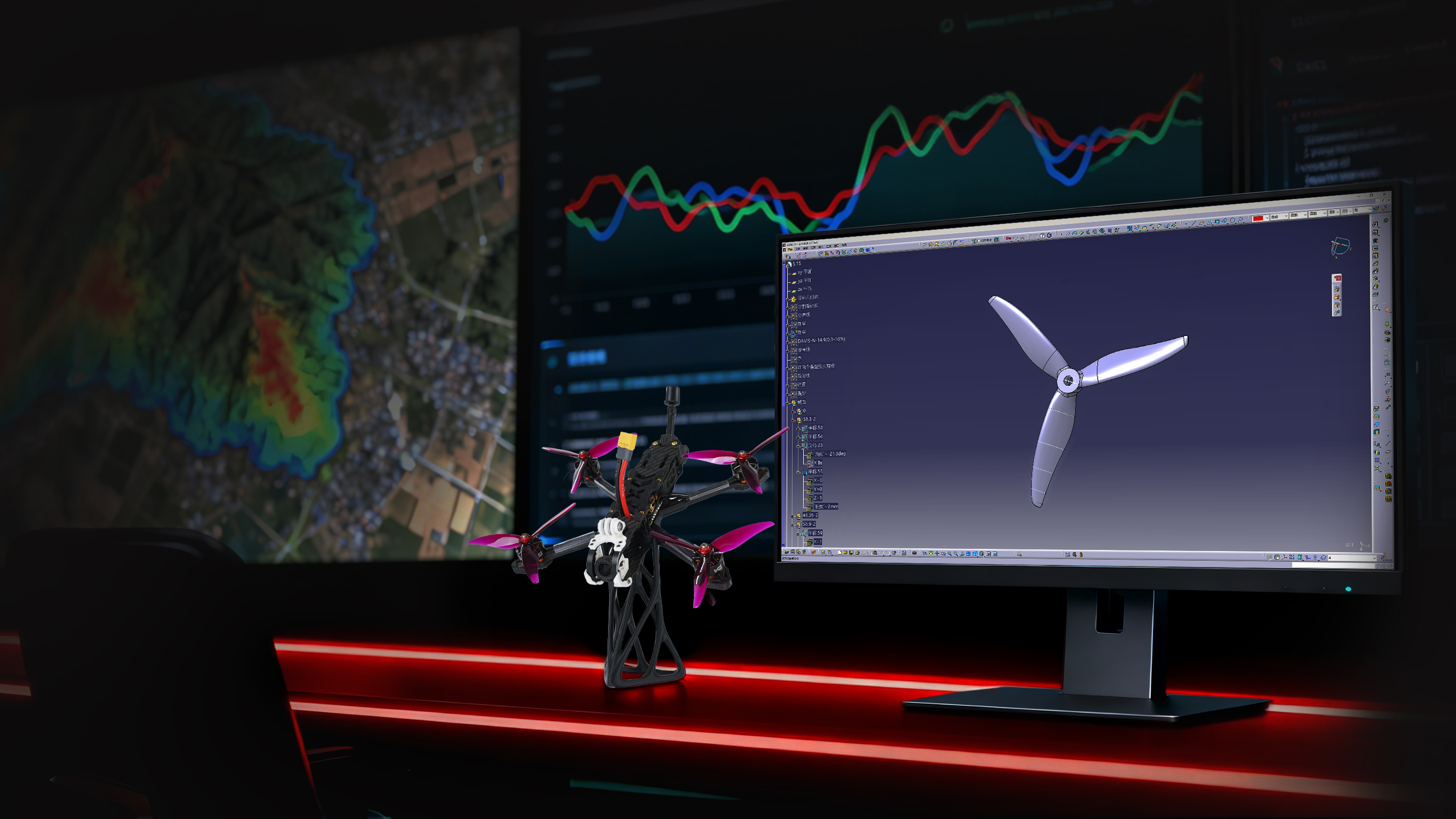
Gemfan’s OEM and ODM customization services provide logistics drone manufacturers with full-spectrum propeller development support. The company’s R&D team, specialized in aerodynamic and structural design, collaborates with aircraft developers from initial concept through mass production. This deep synchronous R&D approach enables propeller designs optimized for specific airframe configurations, motor selections, and mission profiles. The closed-loop development system encompasses demand analysis, exclusive blade design, multi-dimensional verification including thrust efficiency testing, and scaled manufacturing—delivering propulsion solutions precisely calibrated to logistics applications.
Proven Track Record Across Applications
While last-mile logistics represents a growing application area, propeller performance credentials established in demanding adjacent markets provide valuable validation. The company’s propellers serve as frequently-used components among FPV racing champions, where performance margins measured in milliseconds expose any deficiencies in thrust response or dynamic balance. This competitive proving ground validates design approaches and manufacturing quality standards that translate directly to logistics reliability.
The company holds over 50 design patents reflecting continuous innovation in propeller technology, and serves as a power system partner for multiple drone enterprises across consumer, commercial, and industrial segments. Products spanning micro to industrial-grade size ranges demonstrate manufacturing versatility and technical depth across the full spectrum of drone applications. This breadth of expertise enables the company to apply lessons learned from high-performance racing, precision cinematography, and agricultural operations to the emerging logistics market.
Strategic Considerations for Logistics Operators
Drone propellers represent a relatively small component cost within complete aircraft systems, yet their performance characteristics fundamentally constrain operational capabilities and economics. Logistics providers evaluating propulsion options should prioritize suppliers demonstrating specialized materials expertise, precision manufacturing infrastructure, customization capabilities aligned with specific mission profiles, and proven performance across demanding applications.
The propeller selection decision ultimately determines payload capacity, energy efficiency, maintenance intervals, and operational safety margins—performance parameters that directly impact per-delivery costs and service reliability. As last-mile drone delivery transitions from experimental programs to scaled commercial operations, propulsion system choices based on certified performance and manufacturing consistency will increasingly differentiate successful logistics providers from those constrained by inadequate component selections.
For logistics operators seeking certified propeller solutions backed by engineering depth and manufacturing scale, specialized manufacturers like Gemfan Hobby Co., Ltd. offer comprehensive capabilities spanning standard high-performance components and custom-developed propulsion systems. More information about logistics-optimized propeller solutions is available at http://www.gemfanhobby.com or via Contact@gemfanhobby.com.
http://www.gemfanhobby.com
Gemfan Hobby Co.,Ltd. -
AuthorPosts

- You must be logged in to reply to this topic.