- This topic is empty.
-
AuthorPosts
-
2026-01-15 at 11:37 am #11244
As manufacturing moves toward higher precision, traceability, and automation, laser marking machines have become an essential part of modern production lines. From metal components and plastic housings to electronic parts and medical devices, laser marking offers permanent, clean, and high-speed identification without direct contact.
However, not all laser marking machines are suitable for every production scenario. Choosing the wrong system can lead to poor marking quality, inefficiency, or unnecessary maintenance issues. For manufacturers planning to invest in laser marking equipment, understanding key selection factors is critical.
Clarify Your Material and Application Requirements
The first and most important step is to understand what materials you need to mark. Different laser sources interact differently with materials.
-
Metals such as stainless steel, aluminum, copper, and alloys typically require fiber lasers for clear, high-contrast marks.
-
Plastics vary widely in composition. Some plastics respond well to laser marking, while others may burn or deform.
-
Glass, ceramics, and special polymers often require specific wavelengths to achieve fine, crack-free results.
Understand Marking Content and Precision Needs
The complexity of your marking content directly affects machine selection. Ask yourself:
-
Are you marking simple text or serial numbers?
-
Do you need barcodes, QR codes, or micro-sized characters?
-
Is high-resolution marking required for traceability or branding?
Industries such as electronics, automotive, and medical devices often require extremely fine markings that remain readable throughout the product’s lifecycle. In these cases, beam quality, spot size, and marking accuracy become more important than raw power.
Choosing a machine optimized for precision rather than overpowered output helps ensure consistent quality without damaging the product surface.
Evaluate Production Speed and Line Integration
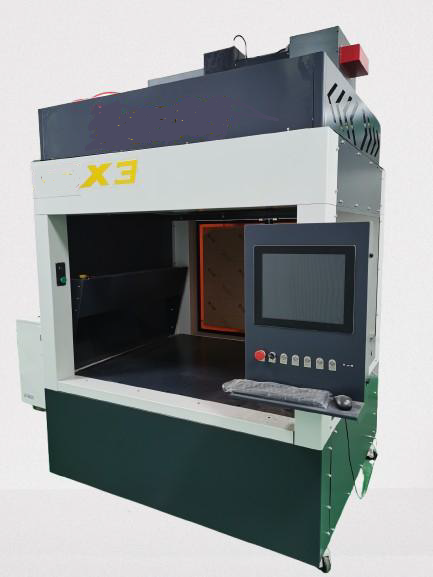
An industrial laser marking machine must fit seamlessly into your existing production line. Key factors include:
-
Required marking speed per unit
-
Continuous operation capability
-
Compatibility with conveyors, robots, or automated feeding systems
For high-volume manufacturing, marking speed and system stability are crucial. A machine that performs well in standalone testing may struggle under real production conditions if it is not designed for long-term, continuous operation.
Mingzhi Laser focuses on industrial-grade systems that support stable performance, easy automation integration, and consistent output over extended production cycles.
Choose the Right Laser Type and Wavelength
Laser marking machines are generally classified by laser source and wavelength, each suited to different applications:
-
Fiber lasers: Ideal for metals and some plastics, offering long service life and low maintenance.
-
CO₂ lasers: Commonly used for wood, paper, leather, glass, and non-metal materials.
-
Green or UV lasers: Suitable for delicate materials, precision electronics, and high-contrast marking with minimal heat effect.
Selecting the correct laser type ensures better marking results and reduces the risk of material damage or quality inconsistency.
Consider Equipment Stability and Maintenance
In industrial environments, machine stability matters as much as marking quality. Frequent downtime can disrupt production schedules and increase operational costs.
When evaluating a laser marking machine, consider:
-
Overall system design and component quality
-
Cooling method and thermal management
-
Ease of daily maintenance and cleaning
-
Availability of technical support and spare parts
Machines designed specifically for industrial use tend to have more robust structures, better heat dissipation, and longer service life.
Software and Control System Capabilities
The control software plays a significant role in daily operation. User-friendly software improves efficiency and reduces operator training time.
Look for systems that offer:
-
Intuitive interface for quick setup
-
Flexible data input for serial numbers and variable codes
-
Compatibility with MES or ERP systems
-
Stable communication with automation equipment
Reliable software ensures smooth operation, especially in production lines where marking data changes frequently.
Safety and Compliance Considerations
Industrial laser equipment must meet safety standards and provide proper protection for operators. Important safety features include:
-
Protective enclosures or safety covers
-
Emergency stop systems
-
Laser shielding and warning indicators
Compliance with relevant industrial safety standards not only protects workers but also helps companies meet regulatory and audit requirements.
Think Long-Term, Not Just Short-Term Needs
Many manufacturers make the mistake of choosing equipment based solely on current requirements. However, production lines often evolve.
When selecting a laser marking machine, consider:
-
Future product upgrades
-
Increased production capacity
-
New material requirements
A flexible system with upgrade potential can adapt to changing needs and provide better long-term value.
Conclusion
Choosing the right industrial laser marking machine is not just about laser power or brand name. It requires a clear understanding of materials, marking requirements, production speed, automation compatibility, and long-term reliability.
By carefully evaluating these factors and working with an experienced manufacturer like Mingzhi Laser, companies can select equipment that delivers stable performance, high-quality marking, and smooth integration into modern production lines.
A well-chosen laser marking machine becomes a reliable production partner rather than a recurring operational challenge.
http://www.mingzhilaser.com
Mingzhi -
-
AuthorPosts

- You must be logged in to reply to this topic.